
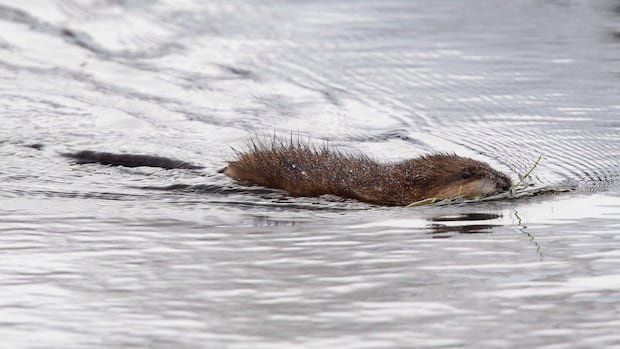

The Northwest Territories Species at Risk Committee (SARC) has designated muskrats as a species of “special concern” for the first time due to the impact of prolonged drought conditions on their habitats. According to a recent statement from SARC, the population trends of muskrats offer valuable insights into the overall health of freshwater environments, which are increasingly under threat from climate change-induced warming and human activities such as dam construction and flood control measures.
Although muskrats are still found throughout the N.W.T., declines in their numbers, particularly in the Mackenzie Delta region, have raised alarms among knowledge holders regarding the species’ well-being. As a response, the committee is emphasizing the importance of sustainable harvesting practices and continuous monitoring to safeguard the remaining muskrat population. Additionally, they are recommending the integration of Indigenous knowledge to enhance awareness about the dwindling muskrat populations.
In a related update, wood bison in the territory are still classified as “threatened” a decade after their initial assessment in 2016. The release highlights concerns over the small size of the bison herd, estimated at approximately 2,760 individuals outside Wood Buffalo National Park, and the downward trend in their numbers over the past 15 years. Communities in the South Slave region and northern Alberta have expressed worries about population declines and disease outbreaks among the wood bison.
The committee is urging relevant authorities to enhance collaboration and information sharing on wood bison population surveys and outcomes while implementing new road safety measures to reduce the risk of collisions with these animals. The N.W.T. SARC regularly conducts assessments on species deemed at risk of local extinction, providing reports and recommendations aimed at ensuring their survival.
Comprising both Indigenous and non-Indigenous experts in the fields of science, wildlife, and traditional knowledge, the committee is jointly appointed by federal and territorial governments, as well as representatives from the territory’s four wildlife co-management boards.