
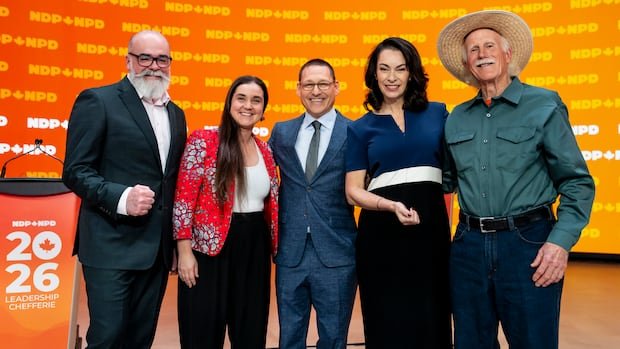

In the NDP leadership race, candidates are starting to differentiate themselves as they wrap up efforts to recruit new members ahead of the party’s March election cutoff. Once the membership enrollment phase is nearly complete, campaigns can focus on persuading eligible NDP members to support their candidacy.
During a recent press event, Heather McPherson expressed her commitment to ensuring that the federal NDP does not undermine its provincial counterparts if she becomes the party leader. Past conflicts between the federal NDP and provincial branches, such as those in Saskatchewan, Alberta, and B.C., have centered on issues like oil and gas development and pipeline expansion. McPherson emphasized the importance of rebuilding relationships with provincial NDP affiliates.
While not naming Avi Lewis directly, McPherson’s remarks appeared to address her competitor’s stance on fossil fuel production. Lewis, who has garnered growing support in the race with notable fundraising success, has advocated for a reduction in fossil fuel activities.
In contrast to Lewis’s momentum, McPherson highlighted the distinct approach of her campaign, which focuses on engaging with NDP members nationwide, including those in smaller communities often overlooked by other candidates. Rob Ashton, another contender, has criticized Lewis for potentially dividing the party and aims to reestablish the NDP as a party that champions workers’ interests.
Despite being considered underdogs in the race, candidates Tanille Johnston and Tony McQuail continue to campaign with Johnston advocating for a guaranteed livable income to alleviate poverty, especially among individuals with disabilities. McQuail, a farmer emphasizing environmental issues, views unity and shared values among candidates as key to the NDP’s success.
As the NDP leadership race enters its final stages, candidates emphasize their unique platforms while recognizing the common goals that unite them in working towards a stronger party.