
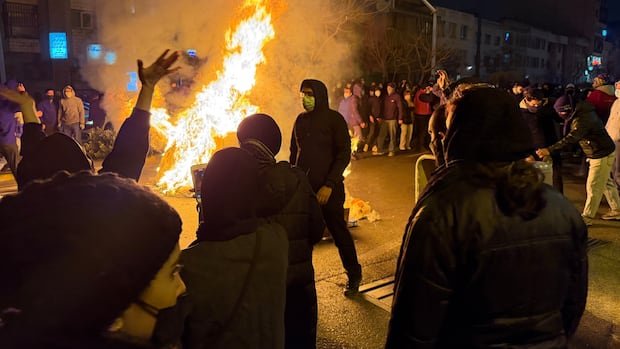

After facing internet disruptions in Iran, accurate reporting on the ongoing protests from overseas has been challenging. However, as communication partially resumed on Tuesday, The Associated Press managed to reach individuals within the country involved in and observing the demonstrations.
The protests, which commenced slightly over two weeks ago due to frustrations over Iran’s struggling economy, quickly shifted focus towards the theocratic regime, particularly criticizing 86-year-old Supreme Leader Ayatollah Ali Khamenei. Visual evidence from Tehran protests captured on Tuesday displayed graffiti and slogans advocating for Khamenei’s demise, an act punishable by death.
Skylar Thompson, affiliated with the Human Rights Activists News Agency (HRANA), expressed astonishment at the reported death toll exceeding 2,000 individuals linked to the protests, surpassing the fatalities recorded during the extended Mahsa Amini protests in 2022 within a mere two weeks. Thompson cautioned that the toll is likely underestimated and could rise further.
Subsequently, HRANA updated the death toll to at least 2,571 individuals. Witnesses who were previously disconnected from the outside world due to communication restrictions described a heavy security presence in central Tehran, detailing damaged government structures and vandalized ATMs.
Despite some individuals in Tehran managing to contact the AP on Tuesday, the AP bureau in Dubai encountered difficulties in returning calls to those numbers. Witnesses disclosed ongoing issues with text messaging services and mentioned that Iranians were restricted to accessing government-approved websites locally, with no internet connectivity beyond national borders.
Eyewitness accounts portrayed a militarized environment with anti-riot police equipped with protective gear and weaponry, along with members of the Revolutionary Guard’s Basij force carrying firearms. Plainclothes security personnel were also present in public areas. Amidst the unrest, several banks and government offices were set ablaze, hindering financial transactions due to the internet outage.
While shops in Tehran were operational, foot traffic was minimal. The Grand Bazaar of Tehran, the epicenter of the protests triggered by the currency devaluation, resumed activities under unclear circumstances as shopkeepers reportedly received instructions from security forces to reopen. Fearful of reprisals, witnesses chose to remain anonymous.
Concerns loomed among the populace regarding potential future developments, including the looming threat of U.S. intervention following President Donald Trump’s warnings. Speculations arose about the likelihood of a military strike against Iran, reflecting the anxieties expressed by residents like Mahmoud, a cautious shopkeeper.
Authorities in northern Tehran were reported to be searching for Starlink satellite terminals, targeting residents with satellite dishes in apartment complexes. Despite the illegality of satellite dishes, officials seemingly overlooked enforcement until recently. A Los Angeles-based activist revealed that Starlink initiated free internet service in Iran starting Wednesday morning, corroborated by various activists online.
In contrast, pro-government demonstrations garnered praise from Khamenei, who hailed the massive turnout across Iran as a message to American policymakers. State TV broadcasts captured the fervent chants of “Death to America!” and “Death to Israel!” echoing throughout the crowds, emphasizing national solidarity against perceived external threats.