

A proposed data center in west Saint John is not expected to significantly impact the city’s Spruce Lake industrial water supply, as per the environmental impact assessment registration document. However, the data center, which includes a natural gas power plant, would require a substantial amount of power at 390 megawatts and would rank high among the province’s greenhouse gas emitters.
The companies behind the project, Beacon New Brunswick and VoltaGrid, disclosed that the data center will utilize a closed-loop water-based cooling system, which is more efficient in water consumption compared to other designs. They anticipate a long-term commercial agreement lasting 15 to 20 years without specifying the customer.
Concerns have been raised about the water consumption of data centers, but the initial water intake for this project is estimated to be around 3.5 million liters, a fraction of what other industrial users in the area utilize. Saint John Mayor Donna Reardon emphasized that the closed-loop system will manage water consumption effectively, likening it to a household heating system.
During a public meeting, VoltaGrid CEO Nathan Ough assured residents that the water requirements would be minimal. The natural gas power plant associated with the data center is projected to release approximately 755,187 tonnes of greenhouse gases annually, making it one of the top industrial emitters in New Brunswick.
Green Party Leader David Coon highlighted the energy demands of data centers and stressed the importance of sourcing electricity from renewable energy to reduce greenhouse gas emissions. The data center, requiring 390 megawatts of power generation, would have an on-site natural gas facility providing 190 MW, with the remaining 200 MW expected from N.B. Power.
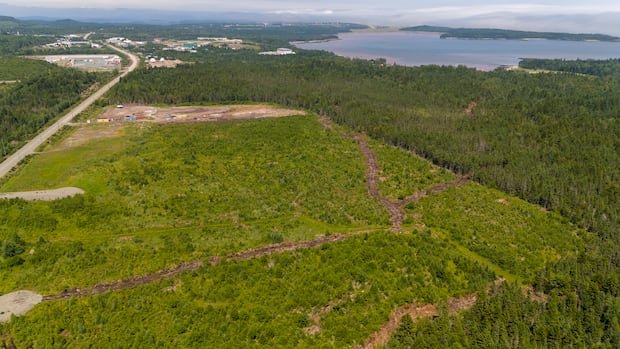
The project is set to be constructed on a 120-hectare site in the Lorneville Industrial Park, following a unanimous rezoning decision by Saint John city council. Despite opposition from some residents, Mayor Reardon expressed support for the environmental impact assessment process to ensure environmental protection measures are in place.
Construction is anticipated to commence this year pending necessary approvals, with the data center and energy infrastructure expected to be operational by 2028 and have a minimum operating life of 25 to 30 years. Further technical reviews and public consultations will be conducted as part of the assessment process.