
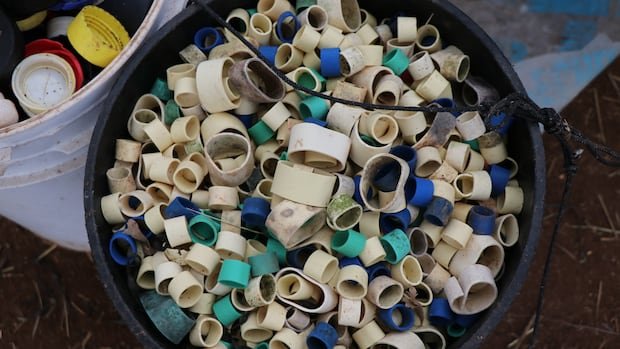

A federal fund aimed at supporting organizations involved in marine and beach cleanups is set to make a comeback, albeit with reduced funding compared to previous years. According to a Department of Fisheries and Oceans spokesperson speaking to CBC News, the relaunched Ghost Gear Fund will amount to $15 million over a three-year period. While the official launch date and any potential changes to application requirements have not been specified by the DFO.
Angela Riley, the founder of Scotian Shores, expressed her contentment with the revival of the federal fund, citing its significant impact on her organization. However, she also noted that the allocated $15 million over three years may not be enough when considering the broader scope of the issue.
Ghost gear, which refers to lost, abandoned, or discarded fishing equipment contributing to plastic pollution in the ocean, is a pressing concern in Atlantic Canada, given its rich fishing history. The Ghost Gear Fund, initially introduced in 2020, provided $58.3 million for 134 cleanup projects in Canada and globally between 2020 and 2024, with no funding allocated for 2025.
In light of Nova Scotia discontinuing its Marine Debris Clean-up Program earlier this year, organizations like Scotian Shores find relief in the continuation of the federal program, which assists in covering the costs of maintaining a litter-free coastal environment.
While the extent of ghost gear in provincial waters is challenging to quantify, numerous lobster traps, bands, and ropes are recovered annually in cleanup initiatives across Nova Scotia. Scotian Shores has been a beneficiary of the Ghost Gear Fund twice, receiving $75,000 initially and $150,000 following the aftermath of post-tropical storm Fiona in 2022.
Similarly, the Fundy North Fishermen’s Association in St. George, New Brunswick, received funding from the federal government to support their cleanup efforts. Darlene Norman-Brown, the assistant director of the association, emphasized the significance of the funding in enabling more in-water retrieval trips, highlighting the positive impact on their operations.
In-water cleanups are resource-intensive, with fishermen facing minimal compensation for their expenses, fuel costs, and time spent on cleanup activities. The retrieved materials are often disposed of or recycled, with funding from the Ghost Gear Fund crucial in supporting responsible disposal practices.
Looking ahead, the Department of Fisheries and Oceans is in the process of developing a Ghost Gear Action Plan, which is expected to be finalized in 2027, aiming to address and mitigate the ongoing challenges associated with ghost gear pollution in marine environments.