
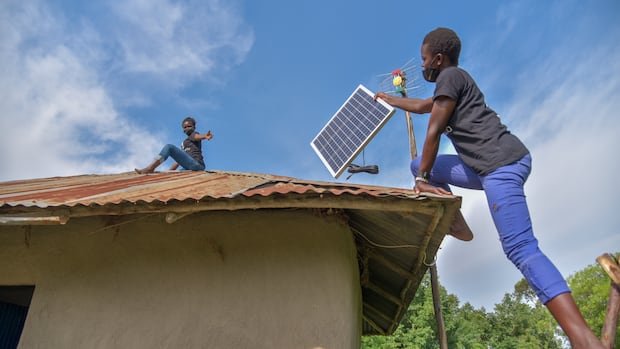

Innovative Approaches to Clean Energy Solutions in Africa by Canadian Companies
Creative strategies like solar-powered battery swapping and rent-to-own rooftop solar are essential for success in Africa, a continent marked by limited resources and diverse cultures, according to Canadian firms operating in the region.
Despite Africa’s fast-growing population and the fact that four in 10 people lack access to electricity, the continent presents lucrative opportunities for both profit and positive impact, according to experts.
In 2021, Africa witnessed a surge in solar energy adoption, installing approximately 4.5 gigawatts of new solar capacity, a remarkable 54% increase, as reported by the Global Solar Council in February. Over half of this capacity was in utility-scale solar farms, while the remaining 44% was in privately financed rooftop systems, particularly in areas with unreliable grid connections.
Although distributed solar systems are becoming a vital growth engine for solar energy in Africa, they face challenges in attracting public and international investments. Private financing often falls short in meeting the needs of households and businesses seeking small-scale solar solutions.
Canadian companies like Solar Panda and Jaza Energy are pioneering innovative ways to bring distributed solar systems to African communities. Solar Panda, based in Toronto, offers rent-to-own rooftop solar packages, providing households with affordable access to electricity through small deposits and daily payments using local mobile money apps.
On the other hand, Halifax-based Jaza Energy has introduced a unique solar battery swapping model, where customers rent lithium-ion battery packs from solar charging hubs to power their lights, TVs, and phones. The company aims to provide affordable electricity solutions to low-income households earning $1 to $1.50 per day.
While the transition to distributed solar is gaining momentum in Africa, financing models have not kept pace with this shift. Most clean energy financing in Africa still comes from public and development sources, mainly directed towards utility-scale projects. To address this gap, companies like Solar Panda operate as a consumer goods company, bank, and utility combined, offering flexible payment plans and integrating with local mobile money providers for seamless transactions.
Despite challenges, the spread of small-scale, distributed solar in Africa is vital for expanding access to electricity, creating local employment opportunities, and driving economic growth. As Africa’s population is projected to reach 2.5 billion by 2050, the continent remains a significant market for solar energy companies, showcasing immense growth potential amidst the obstacles faced.