
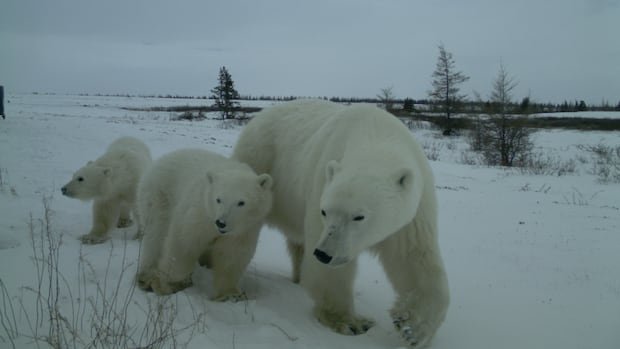

Residents in Northern Canada have observed an uptick in polar bear sightings on land, with more frequent interactions between bears and humans being reported.
It was previously believed that these bears, pushed ashore due to diminishing sea ice caused by climate change, were foraging for food, potentially including humans.
However, a study spanning 11 years conducted by researchers at the University of Saskatchewan and University of Manitoba has challenged this assumption.
According to Douglas Clark, a professor at the U of S, the study revealed that it wasn’t just malnourished bears approaching communities, but bears of all body conditions, ages, and genders, the longer they stayed off the ice.
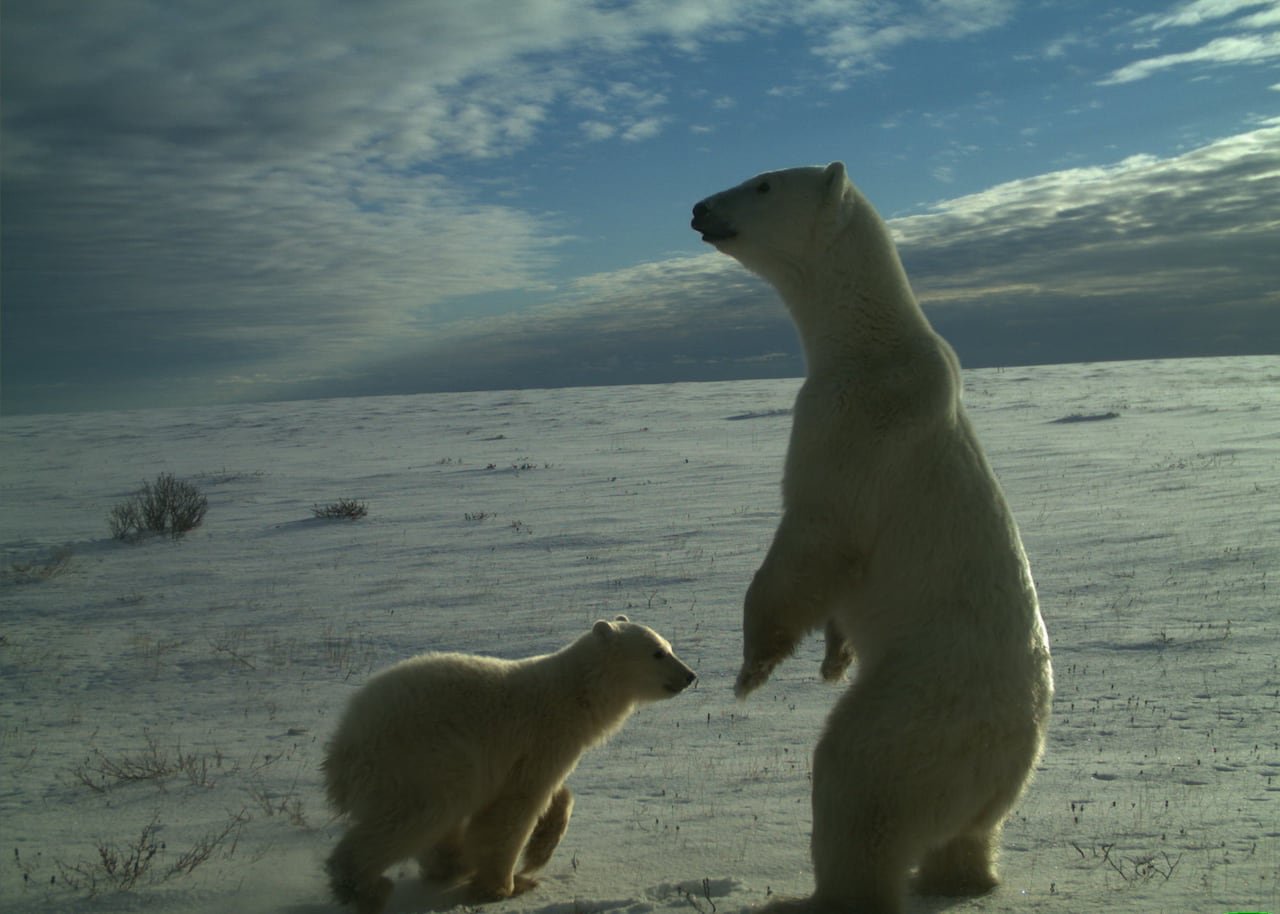
In essence, the increased bear-human encounters were due to the bears spending more time on land.
Clark initiated monitoring efforts 15 years ago by setting up trail cameras in various locations within Wapusk National Park near Hudson Bay, close to Churchill, Manitoba.
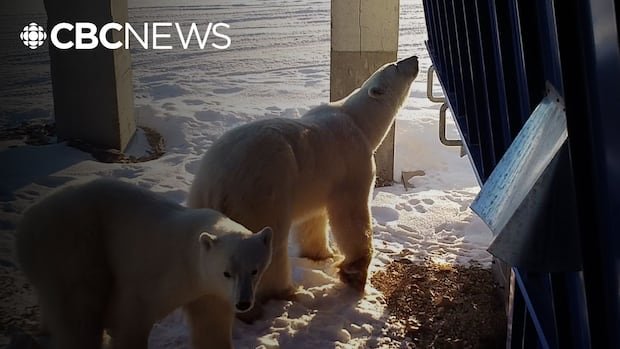
Researchers used to think that polar bears were coming into contact with humans more frequently because they were starving and searching for food. But new research suggests that’s not the case.
Parks Canada noted an attraction of bears to certain new field camps, prompting an investigation into the reasons behind this behavior and whether the bears were drawn to humans as potential food sources.
Clark, a polar bear specialist with over three decades of experience with Hudson Bay polar bears, along with his team, compiled data spanning 11 years, documenting over 500 polar bear visits, analyzing sea ice conditions, and correlating this data with nearby human activities to understand the increased bear-human interactions.
Their findings, recently published in Arctic Science, indicated that the bears were not particularly interested in humans.
The bears were more frequently encountering humans due to climate change-induced sea ice reduction, which led them to spend prolonged periods on land near human settlements and workplaces.
Although some bears were indeed hungry, there was no evidence to suggest they were actively hunting humans.
Clark highlighted that severely malnourished, emaciated adult male bears posed the most danger in such situations.
“Nutritional stress does have an impact. However, it doesn’t seem to be the driving force behind bears approaching communities in desperation as previously thought,” Clark explained.
- <a class="similarLink" href="https://www.cbc.ca/news/canada/manit