
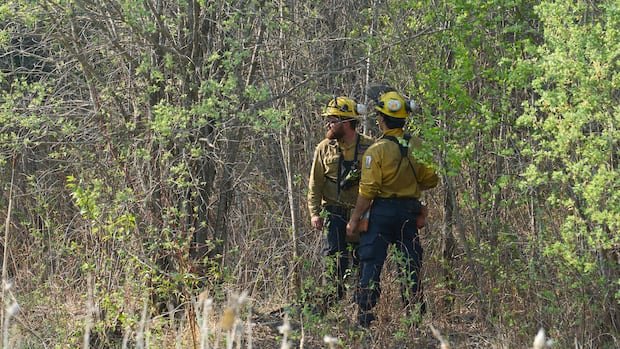

After a wildfire is extinguished, smoke rises from smoldering areas, contaminating the air with harmful substances that firefighters may inhale for extended periods. This phase of fire suppression, according to a former wildland firefighter from Manitoba, represents the peak of poor air quality.
The firefighter expressed that the aftermath of battling wildfires often results in blackened nasal discharge, highlighting the occupational hazards faced in the line of duty. With Canada experiencing longer and more intense wildfire seasons, experts caution that prolonged exposure to smoke and pollutants can pose health risks to firefighting crews.
Christopher Pascoe, an associate professor at the University of Manitoba specializing in chronic respiratory diseases, advised limiting smoke exposure as a precautionary measure. Manitoba has implemented training and provides disposable masks to mitigate the impact of air pollution on firefighters, although effective protection from wildfire smoke remains a challenge.
During physically demanding shifts lasting up to 15 hours, the former firefighter mentioned that air quality concerns were secondary to the tasks at hand. However, Pascoe emphasized the health implications of inhaling wildfire smoke, citing immediate symptoms like breathing difficulties and long-term risks such as heart and lung diseases, including cancer.
While certain masks like respirators offer adequate filtration against hazardous particles in smoke, the Manitoba Government and General Employees’ Union raised concerns about their practicality in firefighting operations. Bulky face coverings may impede firefighters’ performance and comfort during strenuous activities, adding to the complexity of smoke protection measures.
The province provides disposable N95 masks to firefighters, but Pascoe noted limitations in their effectiveness, especially if not properly fitted. Oxygen tanks are impractical for wildfire suppression due to weight and limited oxygen supply, prompting the exploration of alternative solutions like respirators with cartridges for enhanced protection.
Manitoba’s Natural Resources Minister Ian Bushie acknowledged the importance of safeguarding firefighters from wildfire smoke but acknowledged the challenges associated with mask usage. Despite the availability of respiratory protection, concerns about heat stress and breathing difficulties persist among firefighting personnel.
In conclusion, while respiratory protection is crucial in mitigating smoke exposure risks, it is just one component of a comprehensive strategy. Implementing diverse approaches such as rotating crews in smoky areas and ensuring clean air spaces for rest can enhance overall firefighter safety amidst escalating wildfire threats. As wildfire seasons intensify, proactive measures and improved respiratory gear are essential to safeguarding the well-being of frontline responders.