
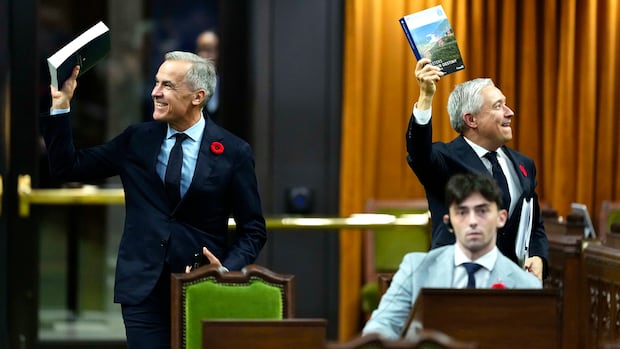

For Canadian artists who tuned into Thursday’s federal budget announcement, the news may feel like a significant financial boost.
“In Budget 2026, we are supporting Canadian artists who narrate our stories,” Prime Minister Mark Carney posted on X, right after Finance Minister François-Philippe Champagne revealed the Canada Creative Credit in the House of Commons.
This tax incentive specifically targets individuals generating income from “original and creative artistic works” within Canada, as per the budget statement.
“This means that if you are a Canadian artist, you will not have to pay tax on up to $45,000 of income earned from your creative endeavors,” Carney included in his message.
However, how much can artists actually expect to take home? Which categories of artists will benefit from this? And when — if at all — will this initiative be implemented?

Over the next five years, Canada’s national museums are set to receive a $783-million increase in funding from the federal budget. The CBC’s David Fraser reports on the implications for the National Capital Region.
What is the Canada Creative Credit?
The budget indicates that it is expected to take the shape of a non-refundable tax credit that would “offer tax acknowledgment on up to $45,000 of annual qualifying net business income generated from original and creative artistic works.”
A non-refundable tax credit represents a fixed reduction in the income tax owed at the year’s end, explains Chris Raymond, a tax advisor and content creator.
In simple terms, the government calculates your total income tax based on your earnings, and then the credit is deducted from that total to lower the overall tax owed.
The “non-refundable” aspect of credits like the Canada Creative Credit means they cannot bring the total tax liability below zero. If the credit exceeds your owed taxes, you do not receive the excess as a refund.
“The taxable income is the figure used to gauge the amount of tax owed,” Raymond noted. “Once that tax figure is established, that’s when non-refundable credits come into play.”
What financial benefit could you see?
Canadians currently benefit from a non-refundable tax credit known as the Basic Personal Amount, which typically covers around $16,000 for most income levels.
The Canada Creative Credit is expected to bridge the gap between the Basic Personal Amount and the government’s target of $45,000, according to Robert Gillezeau, an assistant professor specializing in economic analysis and policy at the University of Toronto.
“For artists earning $40,000, $50,000, or even up to $100,000, this will significantly alter their income situation by the end of the fiscal year,” he stated, adding that it could translate to thousands of dollars each year for those eligible.
“It should be an incentive substantial enough to attract individuals to this field who might otherwise choose different careers.”
-
FRONT BURNER
Carney’s big federal budget bets
-
Your questions about this year’s federal budget, answered
However, this overlooks a potentially significant additional tax source, noted Mohammed Al-khooly, a Toronto-based chartered professional accountant (CPA) and content creator.
“For someone to genuinely exempt the first $45,000 of income, provinces would also need to implement a similar credit for provincial taxes,” Al-khooly stated.
“It’s not entirely tax-free; it’s tax-free only for federal purposes.”
Who qualifies?
This is where the situation becomes complex.
CPA Sam Cao mentioned that the budget indicates government support for young Canadian artists, claiming that “Canadian painters, sculptors, ceramic artists, writers, musicians, and actors are our storytellers.”
Yet, the budget lacks a “precise definition” of which artist categories would qualify, leaving uncertainty over whether a violin instructor or a filmmaker would be more likely to be approved.
“There will likely be some sort of prescriptive list delineating which professions are included and which are excluded. This may be somewhat arbitrary,” Gillezeau remarked.
“They mention support for creativity and the arts in general; any form of writing could potentially fall under that. If, for instance, any form of original writing qualifies, the cost of this credit could skyrocket.”
When asked for a definitive definition of which artists would be eligible, a representative from the Department of Finance directed CBC News to the budget release, stating that more specifics will be provided in the spring economic update of 2027.
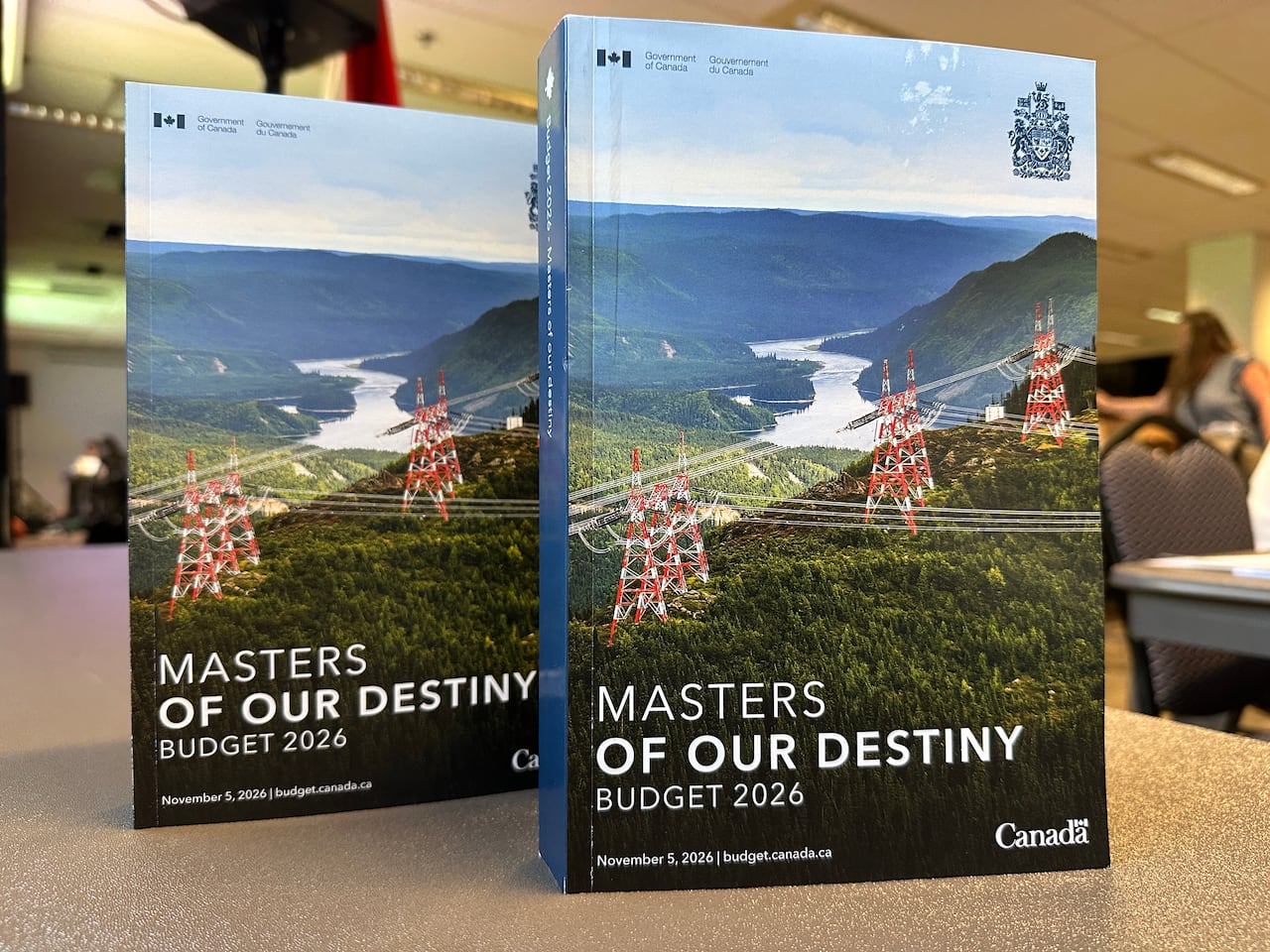
Printed copies of the 2026 federal budget. (David Thurton/ CBC)
How feasible is it?
According to Raymond, the Canada Creative Credit is more of a proposal than a certain financial benefit.
“The budget has not yet been approved. However, they have not confirmed that this will come into effect even if the budget is passed,” he noted. “What they have provided is a concept and an outline of how it might work, and they intend to consult with industry professionals about it.”
Other specific tax credits exist in Canada, such as those for educators and volunteer firefighters. Nevertheless, Cao mentioned that if the Canada Creative Credit were to be implemented in a manner even somewhat resembling its current description, it would represent a novel initiative.
“This could be the first tax credit of its kind explicitly aimed at self-employed individuals through a non-refundable personal income tax credit,” he remarked.

Federal Finance Minister Francois-Philippe Champagne discusses the budget with Matt Galloway the morning after its announcement. Additionally, CBC’s chief political correspondent Rosemary Barton offers analysis.
Gillezeau pointed out that tax policies aimed at specific professions are often viewed unfavorably by economists, drawing parallels between the potential outcome of the Canada Creative Credit and the “boutique” tax credits from the Stephen Harper administration that expanded the tax code excessively.
There are also resemblances to the arts subsidies seen during the 1930s New Deal, in which the U.S. government financed artistic works for the public interest.
What distinguishes this proposal is the introduction of substantial, profession-specific tax credits for income, according to Gillezeau. However, the specifics of what this would entail remain largely unknown.
“It raises questions about whether this would constitute an effective piece of public policy,” he said. “But the actual details for implementation are still far from being finalized.”