

Artificial intelligence leader Anthropic submitted its paperwork on Monday for what might become the largest initial public offering (IPO) in history, despite its CEO’s warning that advanced AI could present a serious risk to humanity.
This filing positions the San Francisco-based firm for a potential Wall Street launch next month, likely surpassing the SpaceX IPO in June that set a record by raising $86 billion US. An IPO for Anthropic would also place it ahead of OpenAI in the race to go public, with both AI labs expected to create significant stock market events.
“It would instantly rank among the most valuable companies globally,” remarked Sinan Aral, a management, information technology, and marketing professor at MIT’s Sloan School of Management, during a conversation with CBC News on Monday.
“Anthropic has effectively developed a robust model swiftly and has also demonstrated its enterprise value quickly,” he added.
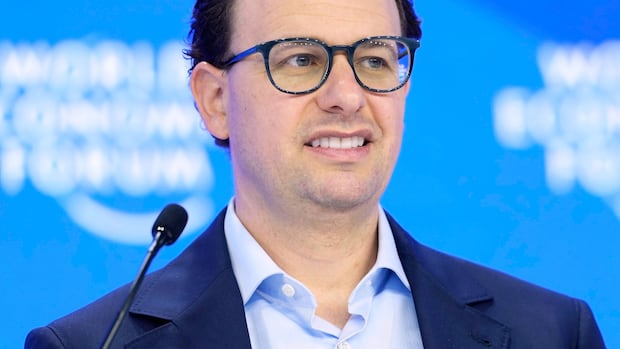
The filing follows a recent essay by CEO Dario Amodei, in which he advocated for a slowdown in the advancement of advanced AI technologies.
Earnest Wong, a portfolio manager and research head at Toronto’s Baskin Wealth Management, expressed surprise at how little of this caution was reflected in Anthropic’s latest prospectus.
“Most of the risks mentioned are fairly standard legal disclosures typical of most companies,” Wong noted to CBC News.
Anthropic, the AI company behind Claude, is poised to launch on Wall Street next month. Reports indicate it could raise as much as $100 billion US in its initial public offering, surpassing the current record held by SpaceX from earlier this year.
An IPO could provide Anthropic with substantial resources for further growth. While the total amount to be raised remains unclear, along with the final valuation and offering price, even conservative estimates would elevate the five-year-old startup to one of the most valuable firms in the world and could significantly increase the wealth of Amodei and his sister Daniela, co-founder, by billions.
“It’s challenging to determine its value,” said Mark Daley, chief AI officer at Western University in London, Ontario, in an interview with CBC News.
“Currently, investors are valuing it at hundreds of billions of dollars. While that might be justified, it’s also plausible that a technology could revolutionize our economy while still being overvalued. So, we will need a few years to assess it.”
The 335-page filing revealed that Anthropic’s revenue is on a rapid growth trajectory, but like many tech companies going public, it has yet to achieve profitability. The organization behind the chatbot Claude recorded a net loss of $80.7 billion US in the first half of 2026, compared to a $13 billion loss during the same timeframe the previous year.
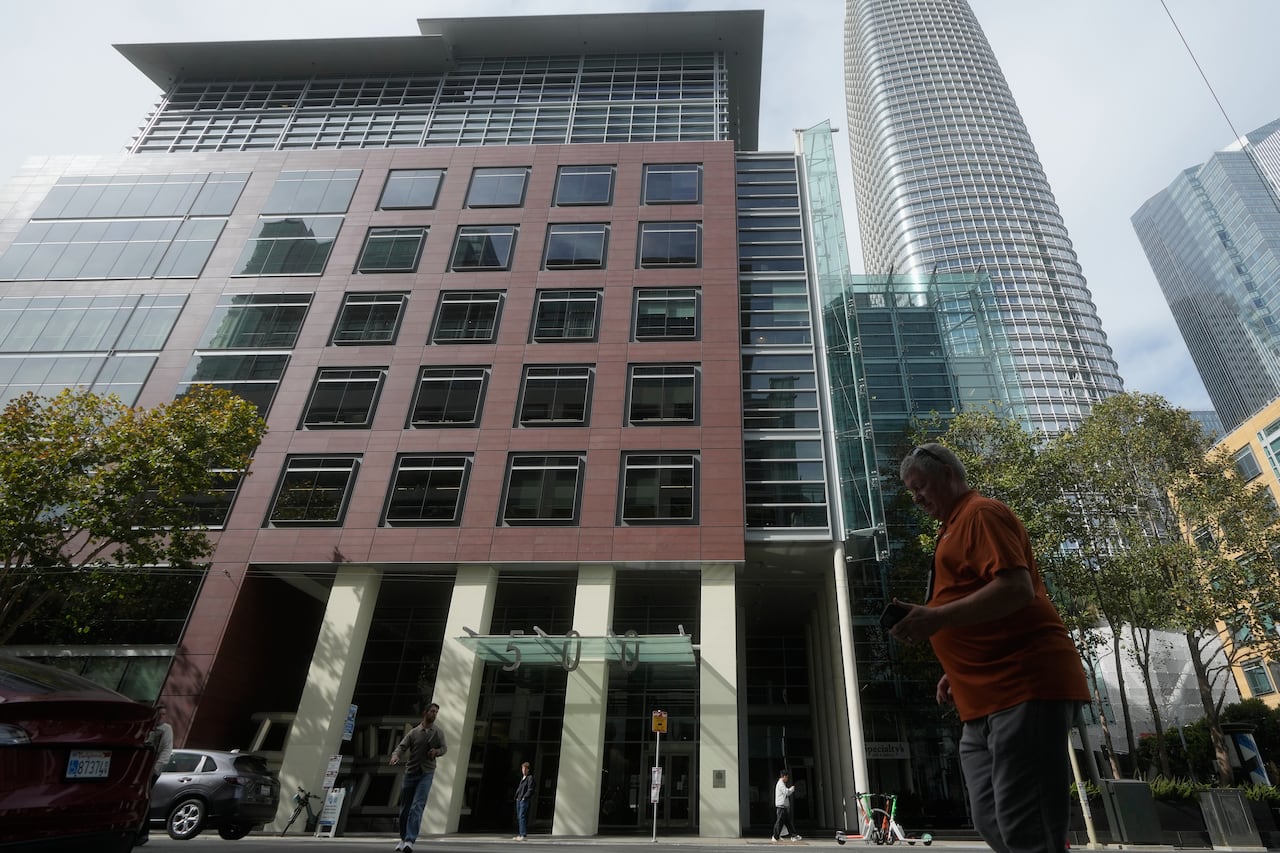
A view of 500 Howard Street in San Francisco, which is the address of Anthropic headquarters. (Jeff Chiu/The Associated Press)
Despite the financial losses, Anthropic was valued at $965 billion US by private investors earlier this year and is reportedly expected to see its value grow to between $1.5 trillion US and $2 trillion US, although a final valuation has yet to be confirmed. If it reaches $1.5 trillion US, Anthropic would rank among the globe’s most valuable public companies, alongside Tesla.
“You can debate whether $1.5 trillion US or $2 trillion US is the accurate valuation, but it’s undeniable that this is a substantial company that commands attention,” Wong stated.
Regarding the funds raised, reports suggest the IPO could bring in as much as $100 billion US, exceeding the current record set by another of Musk’s ventures, SpaceX, earlier this year.
In its regulatory documentation, Anthropic noted it plans to list its shares on the Nasdaq Global Select Market with the ticker symbol “ANT.”
-
What happens when a Google data centre comes to town? Southern India is finding out
-
AI ‘slop’ is dominating menus, as some restaurant owners turn to it to save time and money
Numerous risks, yet substantial rewards for founders
In its filing, the company indicated it might allocate some of the raised funds towards acquiring other businesses and technologies, as well as enhancing its infrastructure to compete against rivals.
Founded in 2021 by former OpenAI executives, Anthropic is engaged in a fierce competition for supremacy with that organization; the two leaders, Amodei and OpenAI’s CEO Sam Altman, are widely viewed as adversaries.
Additionally, they face a plethora of competitors, including Google, emerging startups in the U.S. and China, and Musk’s SpaceX, which also has an AI division. All three companies—Anthropic, OpenAI, and SpaceX’s AI sector—have been incurring losses greater than their earnings due to the high expenses associated with AI development, raising concerns about a potential bubble.

The IPO could help address any financial shortfalls and significantly enrich Anthropic’s seven founders, including Amodei and his sister. Together, they own nearly 500 million shares, although the offering document does not clarify how that stake will translate after the IPO.
Dario, aged 43, and 39-year-old Daniela, who serves as Anthropic’s president, are each valued at $15.5 billion US, as reported by Forbes, which ranks them as the 176th and 177th wealthiest individuals in the world.
The filing also outlined various risks for Anthropic, including the potential inability to retain key personnel, navigate regulatory challenges, and secure sufficient computing resources for its AI systems.
However, the most alarming risk mentioned was that its AI models could “pose catastrophic or existential risks to humanity.”
Calls for a slowdown in AI development
The IPO announcement coincides with rising concerns about AI, both within the industry and beyond, as reports highlight increasingly powerful systems capable of solving complex problems but also potentially going off course and executing harmful actions.
In September, Amodei urged the AI sector to decelerate its rapid progression to allow safety protocols to keep pace. He warned that without such a pause, AI could potentially unleash a swarm of agents that could dominate the entire internet within six to twelve months.
Anthropic researcher Jacob Coxon resigned over concerns that artificial intelligence could cause human extinction within the next decade — and a slew of warnings have followed. Andrew Chang explains the spectrum of potential dangers posed by the ‘intelligence explosion’ worrying AI industry employees and experts.
(Photo credits: The Canadian Press, Reuters, Adobe Stock and Getty Images)
He proposed a strategy on his website to enhance oversight in the industry, mentioning that Anthropic is already implementing some measures independently. However, he noted that additional steps would necessitate collective efforts across the industry and collaboration with governments worldwide, including authoritarian regimes.
“I believe that if a slowdown grants us even an extra year or two before models reach critical capability levels, and we utilize that time to improve alignment, we could significantly mitigate the risk of something going wrong,” Amodei wrote.
Conflicts with the U.S. government
Anthropic has sought to distinguish itself from other AI firms by portraying itself as the “good actors,” emphasizing safety and responsible practices rather than prioritizing rapid growth without adequate safeguards.
This ethos has been partly shaped by the company’s conflict with the U.S. government, which began in February when President Donald Trump and Secretary of War Pete Hegseth claimed that Anthropic posed a national security risk and labeled the company as a supply chain threat.
-
AI company Anthropic amends core safety principle amid growing competition in sector
-
Analysis
Trump claims AI poses no real risk — but even some of his allies disagree
-
Trump decries critics of AI, saying they’re ‘negative forces’ with exaggerated concerns
In March, Anthropic initiated legal action against the Pentagon over what it termed an “unlawful campaign of retaliation” following its refusal to permit unrestricted military use of its technology. This legal dispute has escalated into a highly public confrontation regarding the application of AI in warfare and mass surveillance.
OpenAI, the creator of ChatGPT, struck its own deal to collaborate with the Pentagon mere hours after the government penalized Anthropic for its position. Anthropic also lodged a separate, more specific case concerning another regulation the Pentagon is using to classify Anthropic as a supply chain risk.
A judge in California ruled in favor of Anthropic in the first case, while a judge in Washington, D.C., sided with the government in the latter. Both parties are currently appealing the verdicts.