
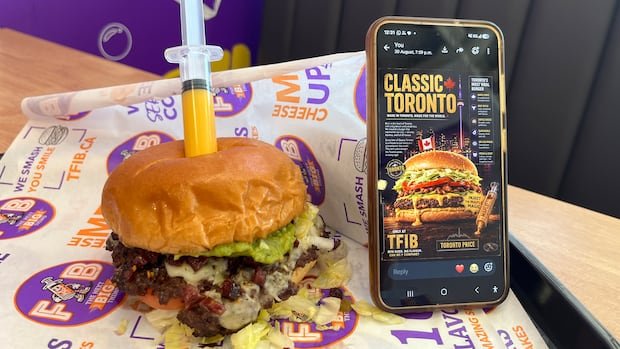

From whimsical sandwiches to shrimp shaped like doughnuts, artificial intelligence (AI) seems to be making its way onto the menus of local fast-food joints. Patrons have been sharing images online of sandwich boards and displays featuring food that appears artificial and surreal, likely generated with AI tools that can create visuals inexpensively.
Some have likened the AI-generated food to what aliens might present as Earth cuisine. This sentiment was echoed by a Reddit user who posted a picture of breaded shrimp and gyros with geometric textures, describing them as uncanny and nauseating.
For some consumers in Toronto, these AI-generated images not only turn their stomachs but also raise concerns about the authenticity of the food and the values of the restaurants displaying them. Cynthia Lem expressed her reservations, noting that such imagery makes her skeptical about the actual quality of the food served.
While some customers find these AI images off-putting and worry about potential misrepresentations, restaurant industry insiders argue that utilizing AI has helped cut costs in a challenging business environment. Marketing experts suggest that as long as AI is used thoughtfully, it can be beneficial.
Before diners take a bite, the visual presentation plays a crucial role in their decision-making process, according to marketing professor David Pullara. Businesses that rely heavily on AI imagery run the risk of damaging their sales and brand reputation if the images are subpar.
Despite some reservations from consumers, experts believe that AI-enhanced food photography, when done well, can be a cost-effective solution for small and medium-sized restaurants struggling to stay profitable in a competitive market. The use of AI technology for food imagery has become a practical tool for businesses looking to manage expenses efficiently.
In the case of The Fancy Induced Burger, the Canadian franchise has embraced AI for enhancing food photos taken by staff using smartphones. By leveraging AI applications, the company has streamlined its marketing process, saving time and resources previously spent on professional photographers.
Concerns about AI potentially leading to false advertising have been raised by some customers, who worry about discrepancies between enhanced images on menus and the actual food served. Marketing experts emphasize the importance of ensuring that AI-generated images accurately represent the products to maintain consumer trust.
While AI technology offers convenience and cost-effectiveness, some industry professionals, like food stylist Zoe Rousseau, argue that the authenticity and attention to detail provided by human intervention cannot be replicated by AI. Rousseau believes that businesses are better off investing in professional photography and styling to create visually appealing and authentic food imagery.
Overall, while AI technology has its benefits in the restaurant industry, striking a balance between cost efficiency and maintaining consumer trust remains crucial for businesses looking to leverage AI for food marketing.