
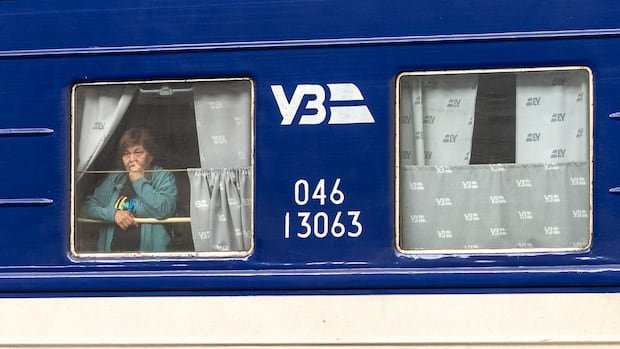

Passengers aboard a train travelling between Odesa and Dnipro in Ukraine were urged to quickly vacate the carriages early one Thursday when railworkers began alerting them. The situation was tense due to an air-raid warning and recent drone attacks on Ukrainian trains. Anastasia Rybalchenko, a 17-year-old passenger, found herself in a rural area close to her final destination, Kropyvnytskyi, after exiting the train.
While waiting for clearance to re-board, Rybalchenko was startled awake by explosions near the tracks. She and other passengers sought shelter in the bushes, unsure of the unfolding events. Fortunately, it was not their train that was under attack, but the railway infrastructure nearby.
Recent weeks have seen an escalation in Russian strikes on Ukraine’s rail network, a critical transportation route spanning approximately 20,000 kilometers. With Ukrainian airspace restricted, the rail system serves as a vital link for passenger travel and the transportation of goods, including essential supplies like grain and aid.
The conflict has disrupted train schedules, leading to significant delays and stricter safety measures for passengers during red alerts signaling potential missile threats. Russian authorities justify targeting railway hubs purportedly serving Ukraine’s military interests, while Ukrainian President Volodymyr Zelenskyy condemns these attacks as attempts to cripple the country’s economy.
Tragically, this year alone, 24 railway workers have lost their lives, with over 80 others injured in the attacks. Efforts are underway to enhance the security of the rail network and repair damaged railway cars. Russia’s deployment of jet-powered drones poses a new threat, with reports suggesting the mass production of these advanced drones.
The mounting risks faced by passengers and railway staff are evident in heightened tensions and frequent evacuations. For many, like conductor Andrii Hul’, the daily challenges of ensuring safe travel amidst conflict take a toll. Despite the dangers, the railways remain a crucial lifeline for many Ukrainians, underscoring the importance of maintaining this vital mode of transport.
As the attacks persist, passengers like Rybalchenko are left traumatized, opting for alternative modes of travel. The ongoing conflict underscores the fragility of normalcy in the region, with safety concerns overshadowing the once routine act of train travel.