
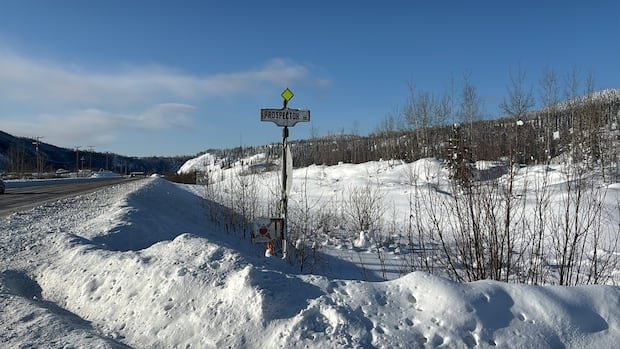

A senior researcher at Yukon University has highlighted the importance of cautious planning by the Tr’ondëk Hwëch’in First Nation and the Yukon Government for development on adjacent lands in Dawson City due to historical flooding incidents. Benoit Turcotte, an expert in hydrology and climate change, emphasized that although the area is not a natural flood plain, it has been altered over the years by mining activities along the Klondike River.
Turcotte suggested that construction may be safe if the elevation is suitable and if space is left for the river. He raised concerns about the rising snowpack levels in the Klondike Valley, which could escalate flood risks. To address this, he recommended collaborating with the Klondike River to create natural channels and reduce water levels.
The joint master planning process for the land near the Dredge Pond subdivision, initiated by the Tr’ondëk Hwëch’in First Nation and the Yukon Government, aims to address these challenges. Turcotte proposed strategies such as removing piled rocks from mining activities and planting terraced vegetation to create a flood plain for the river, allowing it to dissipate energy and flow more steadily.
Cory Bellmore, the minister of community development, noted that discussions are still in the early stages, focusing on assessing the land and potential issues like flooding. The planning process will determine the best approach for development, considering factors like flood mitigation and suitability for construction. The Tr’ondëk Hwëch’in First Nation declined to comment when approached for an interview.