
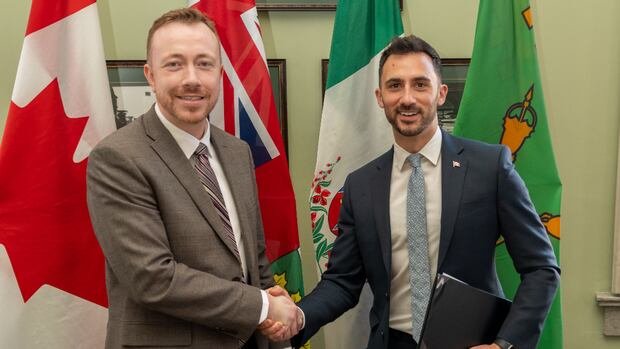

Officials from Ontario and the Yukon have recently inked a deal that signifies the initial phase towards implementing small modular reactors in the Yukon. This technology is seen as a potential solution to the territory’s energy crisis, with the electricity grid close to reaching its capacity and an anticipated rise in demand. According to Ted Laking, Yukon’s energy minister, the urgency to address these needs is growing.
Small modular reactors, being smaller than full-scale nuclear plants, can be prefabricated in factories and delivered to communities requiring energy. Ontario’s energy minister, Stephen Lecce, highlighted that these reactors are faster to construct, comparable in size to a community center, and do not require large land areas.
A single small modular reactor (SMR) has the capacity to produce up to 300 megawatts of power, potentially doubling the Yukon’s current power generation capability. The territory has resorted to using diesel generators to meet energy demands recently, but nuclear power could offer a cleaner and more reliable alternative, especially during harsh winter conditions without emissions.
However, a significant obstacle is that the technology for small modular reactors is not yet developed in Canada. The Darlington Nuclear Generating Station in Ontario is working on developing SMRs based on a design from GEO Vernova Hitachi Nuclear Energy in North Carolina. The estimated cost for constructing the initial reactor is $7.7 billion, with additional infrastructure costs for future reactors. The completion and connection of the project to the grid are targeted for 2030, supported by $2 billion in funding from the Canadian government.
Stephen Veldhuis, a mechanical engineering professor at McMaster University, emphasized the current momentum around nuclear energy and the potential for Canada to make a global contribution in this field. Veldhuis is leading research on the operation of SMRs in extreme conditions, such as those in the Far North, considering factors like temperature differentials.
While the Yukon had previously explored the feasibility of small modular reactors in a 2023 study that identified no major obstacles to development, not all experts share the same optimism. Geology professor Daniel Fortier from the Université de Montréal expressed concerns about the suitability of the Yukon for nuclear energy due to challenges like thawing permafrost and seismic activities that could impact the stability of an SMR facility.
The agreement between Ontario and the Yukon will involve regular consultations to assist Yukon officials in establishing a regulatory framework and addressing issues like uranium supply chains and waste management. Ontario has signed similar agreements with other Canadian provinces, aiming to collaborate on clean energy generation and leverage Ontario’s expertise in constructing the first small modular reactor in the Western world.
While small modular reactor technology has been operational in countries like Russia and China, Canada is the first G7 nation to embark on its construction. The move towards nuclear energy in the Yukon has sparked debates about public opinion and the need for social acceptance in pursuing such energy solutions.