
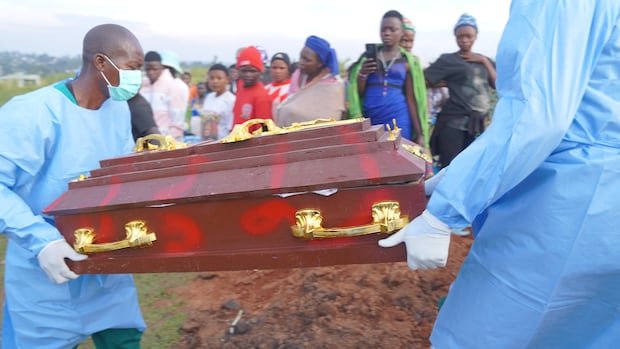

Health authorities combating the Ebola crisis in eastern Democratic Republic of Congo are utilizing de-identified mobile phone data to track population movements and pinpoint potential areas for the virus to spread, as stated by the World Health Organization (WHO) and collaborating researchers.
This innovative approach, previously unprecedented in Ebola response efforts, is a response to the challenge of containing what the WHO has termed the most rapidly escalating Ebola outbreak on record. The outbreak has affected six provinces, infecting over 6,250 individuals and resulting in 3,039 fatalities since its declaration on May 15, according to the latest government statistics.
The current outbreak, the 17th in Congo, is attributed to the Bundibugyo strain of Ebola, for which no approved vaccines or treatments exist.
With the virus spreading, health officials are seeking strategies to predict potential outbreak locations and allocate limited surveillance and response resources effectively.
Olivier Le Polain, head of epidemiology and analytics for response at the WHO Health Emergencies Programme, emphasized the significance of population movements in the epidemic. Conventional risk assessments concentrate on outbreak epicenters, assuming that the virus is likely to expand to neighboring regions. By analyzing mobility data, responders can pinpoint risks in areas that may be geographically distant but interconnected through travel patterns.
“Understanding population movements in Ituri, linked to mining operations and trade, is crucial for comprehending the outbreak’s spread,” Le Polain highlighted.
The analysis, conducted by Swedish non-profit Flowminder, utilizes anonymized data generated when mobile users connect to telecommunications networks. As individuals traverse the country, their phones connect to various network antennas, generating records that indicate where these connections occurred. Researchers leverage this data to estimate people’s travel patterns between different regions.
Vodacom, the largest operator in Congo, provides this data at no cost. Flowminder assures that they receive aggregated and anonymized records without access to subscriber identification.
“We aim to predict how infectious individuals move by estimating people’s mobility patterns,” said Linus Bengtsson, founder of Flowminder.
Early analyses by Flowminder focused on areas where the outbreak originated, tracking travel patterns from April 3 to April 23. Flows were primarily directed towards neighboring regions in Ituri and North Kivu provinces, with subsequent confirmed cases reported in all top destinations by the end of June.
Expanding the analysis as the outbreak spread, Flowminder identified Kisangani, a key transport hub on the Congo River, as a high-risk location due to its significant connectivity. This data prompted early operational reinforcement in Kisangani before the first cases were detected.
Recent studies have highlighted potential links between Kisangani and Kinshasa, as well as areas bordering Central African Republic and South Sudan, emphasizing the risk of spread to Congo’s capital and its largest city.
While the WHO continues to warn of the outbreak’s potential spread to Kinshasa and neighboring nations, limitations exist in the analysis due to reliance on Congolese mobile networks. Efforts are underway to enhance coverage and obtain more detailed data by securing agreements with additional telecom operators.
The collaborative efforts of Flowminder, UN officials, and telecom operators aim to bolster response strategies and improve the understanding of population movements to combat the Ebola crisis effectively.