
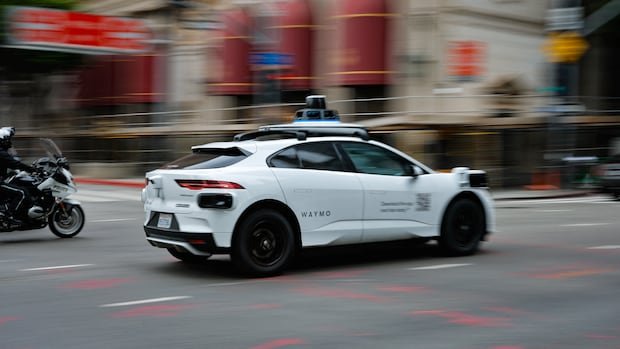

Waymo’s autonomous vehicles were found to be involved in 68% fewer accidents than human drivers in a three-year span across four U.S. cities, based on recent data from the U.S. Insurance Institute for Highway Safety. The study revealed 89 police-reported accidents with Waymo vehicles in San Francisco, Phoenix, Los Angeles, and Austin between 2021 and 2024, compared to 901,525 police-reported accidents involving human drivers in the same locations during the same period, excluding interstates and highways.
Steven Waslander, the director of the University of Toronto Robotics Institute, expressed excitement about the practical application of autonomous vehicle technology in the real world, highlighting the significant decrease in accidents involving Waymo vehicles. The study indicated that 72% of the Waymo-involved accidents occurred when the vehicle was in fully autonomous mode, with approximately half of them carrying passengers at the time.
The data showed that Waymo vehicles covered about 80 million kilometers autonomously, while human drivers traveled 355 billion kilometers in the same areas over the three-year period. These findings resulted in Waymo having a 68% lower crash rate compared to human drivers, as quantified in crashes per million vehicle miles traveled.
The independent study on Alphabet’s autonomous vehicles utilized data from police reports, Waymo, and federal databases. According to the U.S. Department of Transportation, accidents involving self-driving vehicles must be reported if automated driving systems were in use within 30 seconds of the incident, leading to specific property damage or injuries.
Waymo operates in 11 U.S. states and has plans to expand to the United Kingdom and Japan, with lobbying efforts also underway in Canada. Despite the promising safety outcomes for Waymo’s autonomous vehicles, concerns remain about the transparency of data reporting, with calls for more accessible and comprehensible datasets from the U.S. government.
The potential for driverless vehicles in Canada faces challenges due to regulatory limitations and climate conditions. Experts note that while autonomous vehicle collision rates may be lower than those of human drivers, instances of technical challenges have raised doubts about the reliability of the data suggesting their superior safety performance.
Andrew Miller, author of “The End of Driving,” emphasized that Waymo’s vehicles are still in the learning phase, with ongoing improvements needed before widespread adoption. The future outlook suggests that by 2030, driverless ride-hail services may become more common, but complete autonomy is not yet on the horizon.