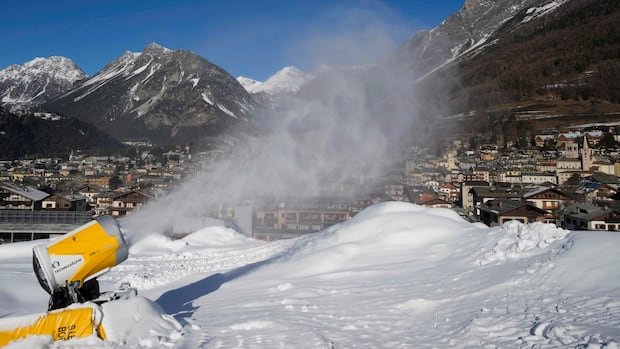

In less than a fortnight, Cortina d’Ampezzo will host the Olympic Winter Games, attracting numerous athletes and a massive audience. However, a recent analysis by Climate Central reveals a significant increase in average temperatures compared to 70 years ago when the town last hosted the event. Temperatures in February have risen from around –7 C in the decade following the 1956 Winter Games to –2.7 C between 2016 and 2025.
Kristina Dahl, the vice-president for science at Climate Central, highlighted the substantial warming trend, emphasizing the impact on temperatures shifting from freezing to thawing. Using a global temperature dataset dating back to the 1940s, Climate Central also identified a reduction of 41 days per year in Cortina with temperatures below freezing.
The report further notes a shift in average temperatures for the Winter Paralympics over the past 50 years. Warm temperatures are becoming more common due to the typical March start date of the Paralympics. March temperatures in Cortina and Milan have increased by 2.5 C and 2.1 C since 1976.
The analysis underscores the escalating impacts of climate change, driven by fossil fuel consumption, on outdoor events like the Winter Games, leading to a growing reliance on artificial snow. Experts emphasize the necessity of ample snow not only for competition areas but also for safety and runoff zones.
Concerns were previously raised about the need for artificial snow at Livigno for freestyle skiing and snowboarding events. However, recent colder temperatures have alleviated these concerns and brought preparations back on track. Ensuring an adequate and reliable snowpack is crucial for the safety of athletes during high-speed competitions like the Tofana Schuss.
Climate scientist and University of Waterloo professor Daniel Scott highlighted the potential risks posed by warmer temperatures, referencing a study from the 2014 Sochi Paralympics that indicated a higher rate of injuries due to environmental conditions. The importance of maintaining suitable snow conditions for athletes’ safety and performance is paramount.
With the impacts of climate change increasingly affecting Winter Olympic events, the future viability of hosting such games is being questioned. A study conducted by Scott and commissioned by the International Olympic Committee examined numerous potential host locations for the Winter Games, emphasizing the necessity of adequate snowpack and cold temperatures for snow course maintenance.
The study assessed the ability of host locations to meet the snow requirements and maintain suitable conditions, indicating that only a limited number of locations may remain viable for the Winter Games and Paralympics by mid-century. Climate change may not only influence the location of events but also prompt changes in athlete training methods worldwide, possibly leading to the need for indoor events and altered training approaches.