
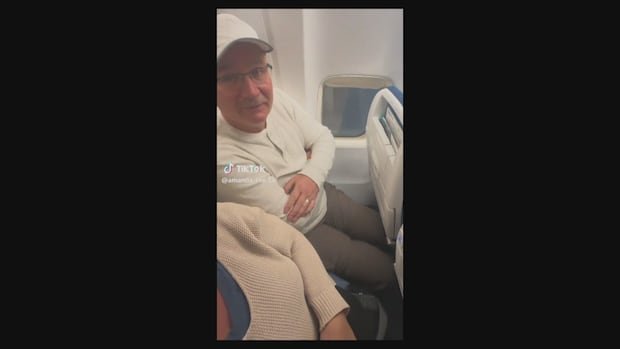

A video that went viral featuring an Alberta family struggling for space on a recent WestJet flight has sparked discussions about legroom for passengers on Canadian airlines and the potential involvement of the federal government. On December 26, 2025, Amanda Schmidt, along with her parents, Manfred Schmidt, were traveling from Edmonton to Toronto on a WestJet flight en route to the Dominican Republic. Opting for ultra-basic economy seats that did not recline, the family found themselves in a very confined seating arrangement.
A video shared on TikTok by Amanda displayed her father, Manfred, who stands at 6’3″ tall and weighs around 220 pounds, visibly uncomfortable in his seat. Manfred expressed his struggle to fit into the seat, emphasizing the lack of space and discomfort, especially for a four-hour flight. Although flight attendants eventually accommodated him in a seat with more legroom, Amanda is calling for accountability from the airline, describing their seating experience as “inhumane” and a safety concern.
In response, WestJet declined an interview but explained in an email to CBC News that the airplane shown in the video is part of their newly reconfigured fleet aimed at making air travel more accessible by introducing changes like altering seat pitch to accommodate an extra row, consequently reducing legroom for passengers. Some rows on specific WestJet planes now offer a 28-inch pitch.
The union representing WestJet pilots expressed discontent with the recent changes made by the airline, highlighting safety concerns due to reduced legroom. Captain Jacob Astin, chair of the WestJet Master Executive Council, reiterated the pilots’ commitment to safety standards, acknowledging the compromises made in seat pitch adjustments.
Aviation expert John Gradek from McGill University noted that a 30-inch pitch is the norm in the Canadian airline industry, with reduced legroom being more prevalent in Europe than in Canada. He emphasized the absence of federal regulations governing seat spacing and called for government intervention to establish customer service standards within the industry.
Manfred Schmidt echoed the need for standardized legroom requirements on planes, suggesting that aviation authorities should set minimum standards to ensure passenger comfort and safety. Transport Canada affirmed its oversight regarding interior modifications affecting aircraft safety and emphasized its role in ensuring compliance with airworthiness standards.
WestJet assured that all modifications were conducted in accordance with Transport Canada’s rigorous airworthiness standards, emphasizing their commitment to passenger safety and comfort.