
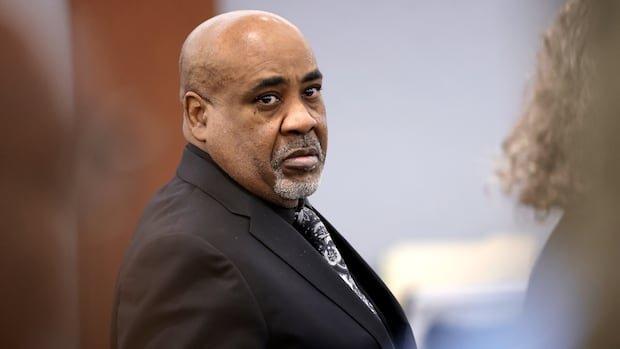

A recent jury decision has found Duane “Keffe D” Davis guilty of masterminding the 1996 assassination of renowned rap legend Tupac Shakur. This marks the first conviction in a long-standing case that has captivated fans of hip-hop for many years. Davis, aged 63, was convicted on Monday of murder with a deadly weapon and faces a potential life sentence. The jury deliberated for three hours following a trial in Las Vegas that spanned several weeks.
Upon hearing the verdict, emotions ran high in the courtroom. Shakur’s sister, Sekyiwa “Set” Shakur, was visibly distraught and reached out to someone behind her, while Davis’s son covered his face with one hand. Chief Deputy District Attorney Binu Palal argued in the closing statements that Davis armed himself and actively sought out Shakur and Death Row Records co-founder Marion “Suge” Knight following an altercation earlier that night involving Davis’s nephew. Palal acknowledged that Davis’s recounting of the events had evolved over time but emphasized that key details remained consistent, particularly Davis’s claim of being present in a white Cadillac from which the fatal shots were fired.
In his defense, attorney Michael Sanft challenged the jury to find evidence beyond Davis’s own statements that placed him in Las Vegas or inside the Cadillac on the night of Shakur’s shooting. Sanft highlighted the absence of surveillance footage and phone records linking Davis to the scene. The case has garnered widespread interest from both hip-hop enthusiasts and legal experts alike. Shakur, an influential figure in the rap industry, was gunned down in Las Vegas on September 7, 1996, while stopped at a traffic light. Despite years passing without any charges being laid, Davis eventually came forward, claiming involvement in the shooting as an act of retaliation.
Under Nevada law, individuals who assist in a murder can be held accountable for the crime. Davis is the sole surviving member among the four individuals prosecutors allege were present in the Cadillac during the shooting. Palal stressed to the jury that if they believe Davis’s statements, additional corroborating evidence is not necessary. The prosecution did not assert that Davis fired the fatal shots but rather that he orchestrated the attack by providing the weapon and issuing orders.
Palal further contended that the shooting was premeditated, citing testimonies and Davis’s own accounts of the events leading up to the encounter with Shakur. The case also involved scrutiny of Davis’s memoir, “Compton Street Legend,” with Palal asserting that Davis aimed to profit from the murder. Conversely, Sanft argued against this assertion, maintaining that the book’s narrative changes did not alter the core account. The trial proceedings also saw Davis’s scrapbook, containing articles about Shakur, brought into focus as evidence of his alleged involvement.