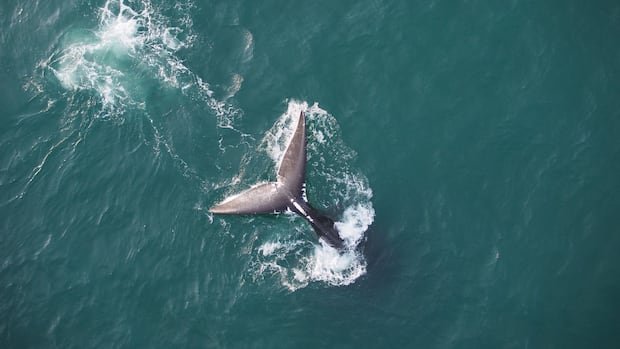

The United States is considering alterations to regulations aimed at safeguarding the critically endangered North Atlantic right whale from ship strikes along the East Coast. The National Oceanic and Atmospheric Administration (NOAA) of the country has revealed intentions to explore potential changes utilizing modern technology to prevent collisions between ships and whales while accommodating industry requirements.
NOAA Administrator Neil Jacobs emphasized the significance of implementing advanced technologies to back American industry and enhance regulatory efficiency. Seeking external input to address unnecessary regulatory and economic burdens stemming from speed restrictions imposed on larger vessels in 2008, the agency aims to streamline regulations without compromising whale protection efforts.
Despite the push for technological solutions, experts caution that current advancements are insufficient to entirely avert whale collisions. Sean Brillant from the Canadian Wildlife Federation pointed out that while technologies like satellites, thermal imaging, and aerial surveys aid in whale detection, they fall short in predicting the animals’ movements, making prevention challenging. Similarly, Moira Brown, the director of science at the Canadian Whale Institute, highlighted the experimental nature of infrared cameras on ships for whale detection, noting their limitations in preventing collisions effectively.
NOAA’s 2020 report evaluated the effectiveness of speed limit regulations, indicating a reduction in whale mortalities since their implementation but underscoring the need for further enhancements. Suggestions include stricter enforcement, extending regulations to smaller vessels, and adjusting speed limits in specific areas and times to bolster whale protection efforts.
Ship pilot Captain Bob Peacock emphasized the importance of adhering to speed limits and effective communication to avoid whale collisions, stressing the collaborative approach in preserving marine life. While acknowledging the potential of technology, Peacock emphasized the continued reliance on human observation and cooperation with local experts to navigate safely in whale habitats.
According to Fisheries and Oceans Canada, documented collisions with ships resulted in four North Atlantic right whale deaths in 2017, contributing to the declining population trend. With the whale population estimated to be less than 400, entanglement in fishing gear and vessel strikes remain primary causes of mortality, underscoring the urgency to enhance protective measures for these endangered species.