
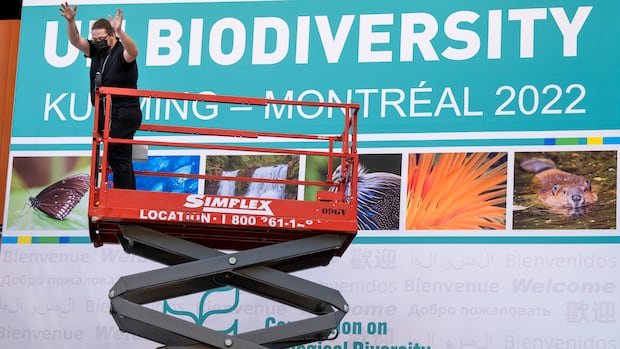

In the winter of 2022, amidst snowy conditions in Montreal, Canada played host to a gathering of more than 180 UN member nations for discussions on a groundbreaking new accord aimed at safeguarding nature. The global ecosystem faced an unparalleled crisis, with over a million species on the brink of extinction, prompting world leaders to recognize the imminent risk of ecosystem collapse.
Former environment minister Steven Guilbeault played a pivotal role in facilitating consensus and setting a new objective to protect 30% of the world’s land and oceans by 2030 to combat the looming mass extinction. These designated areas would be shielded for conservation purposes, with activities like fishing and mining either prohibited or severely restricted.
The agreement also included a commitment to assist lower-income nations with financial aid for establishing and managing these protected zones. Guilbeault described the compromise reached in Montreal as a delicate balance between those advocating for greater ambition and those pushing for increased funding.
However, the primary obstacle hindering the fulfillment of the Montreal agreement’s objectives is the lack of sufficient funding. A recent assessment report unveiled in New York projected that based on current commitments, only 27% of terrestrial areas and a mere 12% of oceans would be protected by 2030.
While there is optimism about nearing the terrestrial protection target, Guilbeault expressed concerns about the substantial work required to safeguard oceanic regions. This assessment coincides with Canada’s shift towards expediting resource projects, causing delays in meeting its own climate targets.
According to the assessment conducted by Campaign for Nature and Together for the Ocean, accelerating nature conservation efforts and achieving set targets necessitate a significant increase in funding. The Montreal agreement had outlined a goal of $30 billion US annually for international biodiversity conservation in developing countries, with a specific requirement of $6 billion US for establishing protected areas on land and sea.
However, the current international financing stands at only $1.1 billion US annually, falling short of the target. This funding is intended to flow from wealthier nations like Canada and Japan to developing countries to support the creation of protected areas, fund ranger programs, and assist local communities and institutions.
Although progress has been made, with over 50 countries reporting land coverage exceeding 30% and 20% of lands along with 10% of oceans already protected, more efforts are needed. Canada’s recent ratification of the High Seas Treaty, a global pact regulating oceans beyond national jurisdictions, is seen as a significant step towards enhancing oceanic protection.
With the treaty’s ratification by 101 countries and its official enforcement, countries are poised to collaborate on preserving marine resources and combating climate change. Canada’s proactive stance on ocean protection, as demonstrated by commitments made at the Our Ocean Conference in Halifax and the allocation of funds for ocean monitoring, emphasizes the country’s dedication to environmental conservation.
While progress is being made on certain fronts, concerns persist over the Carney government’s relaxation of environmental regulations to expedite infrastructure projects amid economic considerations. Environmental advocates stress the importance of prioritizing nature conservation, underscoring its crucial role in economic prosperity and overall well-being.
As Canada grapples with balancing economic development and environmental preservation, maintaining a harmonious approach that prioritizes both aspects remains a crucial challenge.