
The United Arab Emirates announced on Saturday the complete withdrawal of its troops from Yemen amidst heightened tensions in the war-torn nation, which had pitted the UAE against Saudi Arabia. The UAE Defence Ministry stated that this action was in line with a previously announced decision to wrap up the remaining missions of counterterrorism units. Although no specific details regarding the number of soldiers and equipment withdrawn were provided, there were several Emirati military cargo flights observed moving in and out of Yemen in recent days.
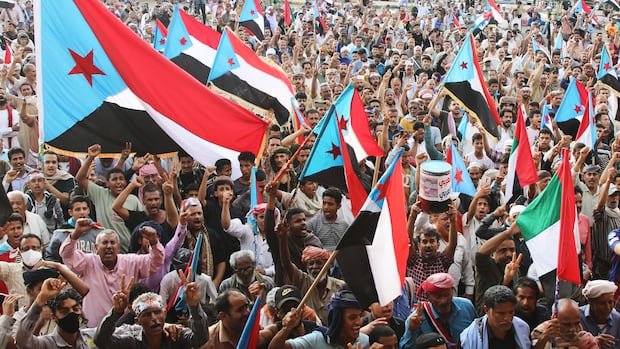
Meanwhile, Yemen’s UAE-backed separatist group, the Southern Transitional Council (STC), unveiled a constitution for an independent state in the south and called for acceptance of this move by other factions within the country. While the STC presented this as a declaration of independence for the southern region, it remains unclear whether this announcement can be practically realized or if it primarily holds symbolic significance.
In a recent development, fighters affiliated with the STC captured control of two southern provinces from Saudi-backed forces and seized the Presidential Palace in Aden, the main city in the south. Consequently, members of the internationally recognized government, previously based in Aden, fled to the Saudi capital, Riyadh. Saudi warplanes targeted camps and military positions held by the STC in Hadramout province on Friday, as Saudi-backed fighters attempted to take over these facilities, as reported by a separatist official.
The ongoing tensions have led to direct involvement by Saudi Arabia, including strikes on STC forces in recent weeks and an attack on what was claimed to be a shipment of Emirati weapons destined for the separatists. While ostensibly part of a Saudi-led coalition fighting the Iranian-backed Houthi rebels in Yemen, known as Ansar Allah, the Saudi-UAE alliance, along with their allies on the ground, has aimed to restore the internationally recognized government displaced by the Houthis in the north during the country’s prolonged civil conflict.
However, the escalating tensions between various factions and the Gulf nations of Saudi Arabia and the UAE have strained the coalition, raising the risk of internal conflict and further destabilization in Yemen, already considered the poorest Arab nation.