
Most U.S. stocks experienced declines on Wednesday due to a resurgence in oil prices, yet the markets maintained relative stability for a second consecutive day, following turbulent movements earlier in the week amid ongoing conflicts in the Middle East. The S&P 500 closed the trading day with a 0.1 percent drop, while the Dow Jones Industrial Average slipped by 0.6 percent and the Nasdaq composite saw a modest 0.1 percent increase. Notably, Oracle’s strong profit report helped mitigate the losses on Wall Street.
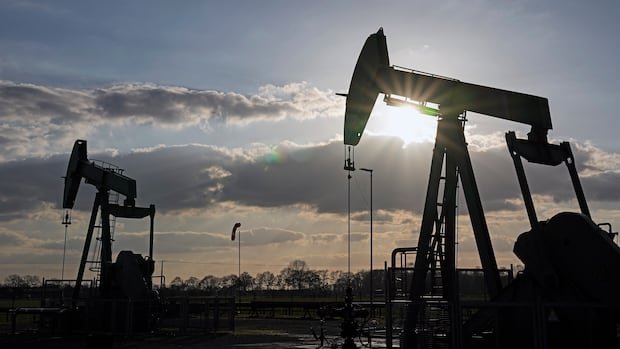
In the wake of the conflict that began on Feb. 28, oil prices have been a primary driver of significant fluctuations in global financial markets, with drastic shifts occurring frequently. The recent spike in oil prices, reaching levels unseen since 2022, was attributed to concerns over potential disruptions in Middle East oil production, sparking fears of heightened inflationary pressures on the global economy.
Despite the International Energy Agency’s announcement that its members would release a historic amount of 400 million barrels of oil from emergency stockpiles, oil prices saw a rebound on Wednesday. Analysts suggest that while such releases may temporarily alleviate the pressure on oil prices, a full restoration of oil and natural gas flows from the Persian Gulf region is necessary to provide a lasting solution, with investors eagerly awaiting the cessation of the conflict.
The price of Brent crude, the global benchmark, surged by 4.8 percent to settle at $91.98 US per barrel, while the benchmark U.S. crude also rose by 4.6 percent to $87.25 US per barrel. Concerns primarily focus on the Strait of Hormuz, a critical passage for global oil shipments, where a significant portion of the world’s oil trade is typically conducted, now disrupted due to the ongoing conflict.
In response to the IEA’s call for member countries to release oil reserves, Germany, Austria, and Japan announced plans to release portions of their reserves. The U.S. took action against Iranian vessels laying mines in the region, emphasizing the importance of ensuring the flow of crude oil through the Strait of Hormuz and alternative routes to stabilize oil prices amid the ongoing tensions.
Market analysts warn that while emergency oil reserve releases may provide a temporary buffer, the core issue lies in resolving the supply disruptions caused by the conflict. Prolonged disruptions could lead to further price escalations if the conflict persists, potentially exacerbating the economic challenges.
As uncertainty looms over the impact of sustained high oil prices, global markets remain volatile, with the possibility of prolonged high inflation posing risks to economic stability. The risk of “stagflation,” characterized by stagnant growth and persistent high inflation, looms over the global economy if oil prices remain elevated for an extended period. A recent report highlighted a 2.4 percent increase in consumer prices in the U.S. compared to the previous year, reflecting mounting inflationary pressures exacerbated by the recent surge in gasoline prices due to geopolitical tensions.
The spike in oil prices has led traders to reassess expectations regarding the Federal Reserve’s interest rate adjustments, with delays anticipated for potential rate cuts. President Trump’s calls for rate cuts to stimulate economic growth and job creation have faced resistance, as such actions could further fuel inflationary pressures in the economy.