

The U.S. authorities have taken control of the Olina tanker in the Caribbean Sea, marking the fifth vessel targeted recently to restrict Venezuelan oil exports, as per U.S. officials on Friday. The Olina, disguised under the flag of Timor Leste according to Equasis shipping database, had previously departed from Venezuela and returned to the area, said a source familiar with the situation. In an early morning operation, marines and sailors from Joint Task Force Southern Spear, dispatched from the USS Gerald R. Ford carrier, seized the Olina in the Caribbean Sea without any issues, as confirmed by the U.S. Southern Command.
The vessel departed Venezuela last week carrying a full load of oil as part of a fleet after the U.S. captured Venezuelan President Nicolás Maduro on Jan. 3. It was on its way back to Venezuela fully loaded following the U.S. blockade of Venezuelan oil exports. The vessel’s location tracker was last active 52 days prior in the Venezuelan EEZ, northeast of Curacao, according to British maritime risk management company Vanguard, following a series of pursuits of tankers associated with sanctioned Venezuelan oil shipments in the region.
The U.S. had imposed sanctions on the tanker in January of the previous year when it was known as the Minerva M due to its involvement in the unregulated and uninsured shadow fleet of ships. Another tanker, the M Sophia, from a fleet that departed Venezuela earlier in the month, was also seized by U.S. forces recently. Three other vessels, Skylyn, Min Hang, and Merope, part of the same fleet that sailed last week, returned to Venezuelan waters on Thursday, as reported by the industry source.
Additionally, seven more tankers from the same fleet, all fully loaded, were expected to return to Venezuelan waters on Friday and Saturday. Pentagon spokesperson Sean Parnell highlighted that several oil vessels had turned back in the past 24 hours to avoid interception, indicating strict enforcement. All the oil on these ten tankers belongs to Venezuelan state producer PDVSA. The U.S. government’s blockade of sanctioned Venezuelan oil remains in effect globally, according to Defence Secretary Pete Hegseth.
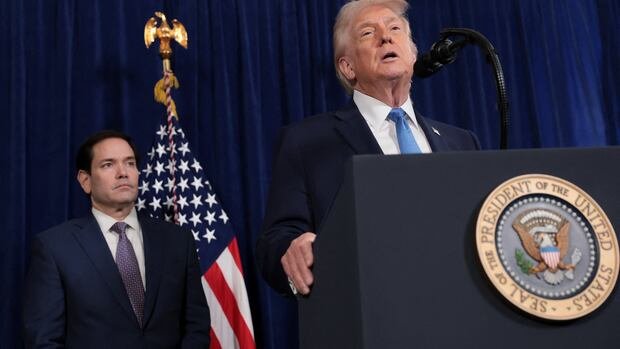
In a recent development, U.S. President Donald Trump revealed the cancellation of a planned second wave of attacks on Venezuela following positive signs of cooperation from the country. Trump mentioned Venezuela releasing political prisoners as a gesture of peace and cooperation, leading to improved relations between the two nations. The President expressed optimism about the collaboration, emphasizing joint efforts to enhance Venezuela’s oil and gas infrastructure.
Trump’s decision to cancel the second wave of attacks was influenced by the ongoing cooperation, ensuring the safety and security of ships stationed in the region. The President’s remarks came after indications of a potential visit by Venezuelan opposition leader Maria Corina Machado to Washington next week, illustrating evolving dynamics in the U.S.-Venezuela relationship. Trump also mentioned plans to meet oil executives to discuss significant investments in Venezuela, highlighting the growing partnership between the two nations.