
U.S. President Donald Trump’s chief trade representative has specified conditions that Canada must adhere to for the upcoming mandatory review of the Canada-U.S.-Mexico Agreement (CUSMA). Among these conditions are familiar issues like dairy supply management. However, a less common concern raised was regarding Alberta’s electricity system. According to U.S. Trade Representative Jamieson Greer, Alberta needs to address its perceived unfair treatment of electrical power distribution providers in Montana.
Montana representatives have expressed that Alberta’s regulations sometimes impede the sale of Montana electricity into Alberta, impacting their power producers and hindering cross-border transmission investment. On the other hand, Alberta asserts that it treats Montana no differently than its Canadian counterparts.
Last year, the Office of the U.S. Trade Representative cited Alberta’s Alberta Electricity System Operator (AESO) as a trade irritant. This issue has significant implications at the federal level, potentially affecting trade agreements, according to Daniel Zolnikov, a Republican state senator from Montana.
Zolnikov highlighted the uncertainty surrounding the use of transmission lines between Alberta and Montana as a barrier to new infrastructure investment. He emphasized the urgency of addressing the issue promptly rather than deferring it to the future.
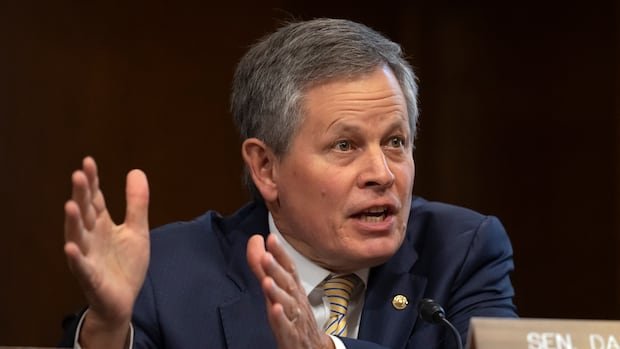
In response to the situation, a spokesperson for Steve Daines, Montana’s senior U.S. Republican senator, expressed concerns about alleged discriminatory rules and regulations from Alberta against Montana electricity producers. Alberta’s Utilities Minister Nathan Neudorf refuted Montana’s claims, stating that all jurisdictions are treated equally.
Alberta’s evolving energy landscape, including the phase-out of coal power in 2024 and increasing reliance on renewable energy sources, has contributed to the dispute with Montana. The limited connections of Alberta’s energy grid to neighboring regions pose challenges, according to Ian Nieboer, an energy transition expert.
Efforts to enhance grid capacity and resolve the ongoing dispute are imperative. Neudorf emphasized the importance of collaboration and investment to improve interties with neighboring regions. However, the cost and long-term implications of such initiatives remain key points of discussion.
Overall, the disagreement between Alberta and Montana underscores the complexities of managing modern electricity systems and the necessity of fostering regional cooperation for the benefit of all stakeholders.