
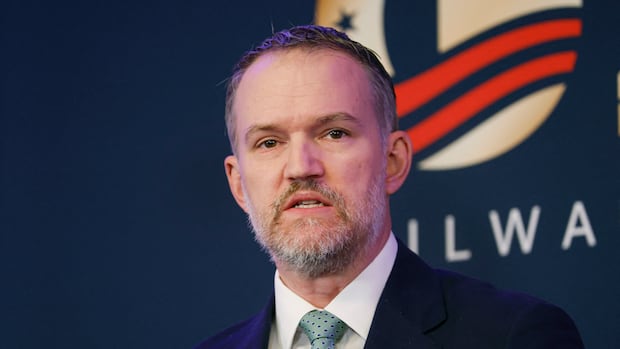

Jamieson Greer, the U.S. Trade Representative, reports that he frequently communicates with his Canadian counterpart; however, both nations have encountered a deadlock concerning certain trade issues, with no immediate resolution in sight.
During a press briefing at the G20 trade ministers’ meeting in Milwaukee, Greer expressed a lack of optimism regarding the likelihood of a deal with Canada, noting that while “technical discussions” are taking place among trade specialists from both nations, significant disagreements persist.
“There are several unresolved matters that are quite challenging to address,” Greer remarked.
He stated that the Trump administration’s strategy of imposing tariffs on imported goods to facilitate America’s “reindustrialization” is a broader policy not targeted at any single nation.
In contrast, Canada argues that imposing punitive tariffs on industrial goods such as steel, aluminum, and automobiles is illogical, considering the deep integration of their economies after years of free trade.
The Canadian government has vehemently opposed U.S. tariffs aimed at undermining these crucial sectors, stating that such treatment is inappropriate for a supposed ally. Furthermore, Canada remains the largest purchaser of American goods, outpacing any other nation.
U.S. losing manufacturing jobs
Nonetheless, Greer indicated that Canada and other nations view the U.S. as “a dumping ground” for their products, and the U.S. aims to increase its domestic production. He clarified that these policies should not be interpreted as “threats against Canada” alone.
Despite Greer’s assertion that these tariff measures are enhancing industrial employment, data from the U.S. Bureau of Labor Statistics, compiled by the Economic Policy Institute, reveals that approximately 62,000 manufacturing jobs have been lost since Trump began his second term in January 2025.
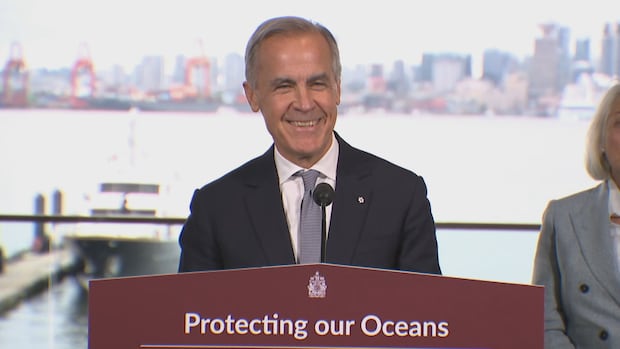
Responding to CBC News regarding U.S. President Donald Trump’s Monday comment that Canada would soon apologize to strike a trade agreement, Prime Minister Mark Carney stated that Canada “stands ready to negotiate in good faith” for a deal that “respects both our countries’ sovereignty.”
International Trade Minister Maninder Sidhu, who oversees trade matters outside of the U.S., met with Greer during his visit to Wisconsin.
Their discussions primarily revolved around broader global trade challenges, such as the eradication of forced labor and the issue of countries like China heavily subsidizing products for market economies.
However, Sidhu noted that the Canada-U.S. trade dispute was also a topic during their conversation in an interview with CBC News.
He emphasized to Greer the necessity for both nations to “find a way to collaborate, particularly for our automotive supply workforce.”
“I believe there is a willingness from both parties,” Sidhu remarked, describing the exchange as “very cordial.”
“However, we desire a fair deal,” he added. “We will not settle for anything less.”
Greer downplays Trump’s deal comments
Earlier on Thursday, in a conversation with Bloomberg News during the summit, Greer appeared to downplay President Donald Trump’s claim that Canada would soon reach out for a deal and that an agreement could be finalized within a month.
“The president has mentioned this. Recently he said, ‘Well, we might have a deal with Canada in a few weeks.’ I would like to stress the word ‘might’ in that context,” Greer stated.
Greer reiterated that the U.S. is amenable to a deal with Canada, but he implied that Prime Minister Mark Carney and his team might struggle to agree to the terms being proposed by the Americans.
“The question is whether Canada is willing to reach an agreement on some of these points. Our trade policy does not favor the elimination of tariffs since we are aiming to bring production back home,” he remarked. “There are still differences between Canada and the United States.”
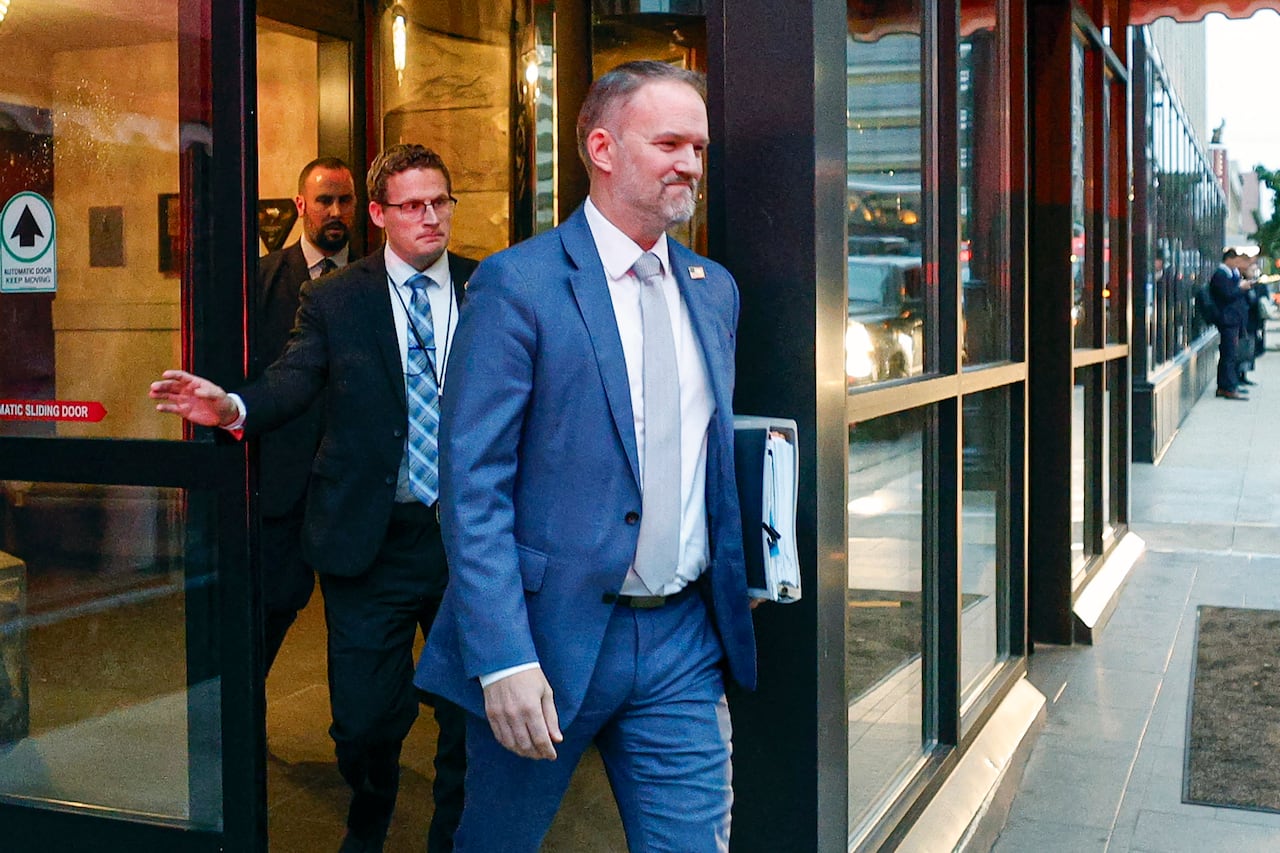
Greer participates in the first day of the G20 Trade Ministerial Conference in Milwaukee on Wednesday. (Kamil Krzacysnki/Getty Images)
These “differences” became clear when Canada-U.S. trade negotiations fell apart in August, leading Carney to withdraw his negotiators from Washington after what he characterized as a series of last-minute changes from the U.S. that were unworkable for Canada.
Canada expressed concerns regarding U.S. tariffs on medium- and heavy-duty trucks, which could jeopardize the competitiveness of a GM facility in Oshawa, Ontario, that manufactures Chevrolet Silverados, and threaten the planned production of Ford F-250s in Oakville, Ontario.
-
Carney says trade deal became untenable when U.S. ‘asked too much and offered too little’
-
Video
Carney outlines the last-minute changes U.S. tacked onto trade deal terms
Carney also pointed out this week that he could not agree to terms in the proposed deal that might undermine Canada’s sovereignty, particularly clauses he described as restricting the government’s capacity to engage in trade agreements with other nations.
U.S. objections to Canadian initiatives aimed at enhancing the “discoverability” of French-language content on streaming platforms were also a concern, according to Carney.
While Greer seemingly retracted U.S. demands regarding French-language content in a recent CBC News interview, there has been no evident advancement on those other matters since the bilateral discussions broke down.
Carney expressed this week that he believes negotiating a “mutually beneficial trade agreement” with the U.S. is feasible in the future.
“Canada is prepared to negotiate in good faith,” he asserted.