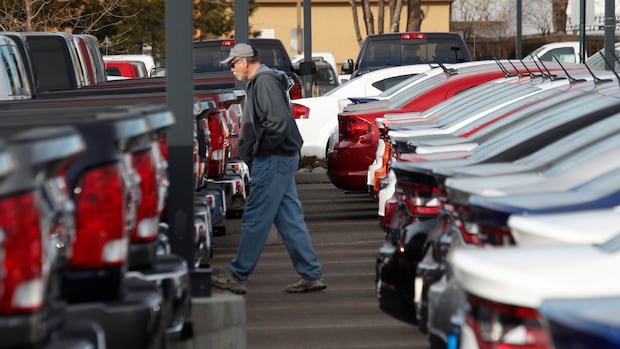

The U.S. auto industry is facing a persistent challenge with affordability, potentially pushing more Americans towards used cars and exposing carmakers to competition from lower-priced alternatives.
The debate around this issue has been politicized, with President Donald Trump and Republicans attributing the problem to environmental and safety regulations, while Democrats point fingers at Trump’s tariffs. However, a recent analysis of industry sales data by Reuters revealed a different factor at play – the lack of budget-friendly models from automakers. Instead, showrooms are stocked with larger, more luxurious vehicles, driving up the average price of a new car in the U.S. to approximately $47,000.
This shift towards more upscale vehicles reflects the widening economic gap in the U.S., where wealthier consumers are dominating spending patterns while middle- and lower-income individuals are struggling. Consequently, the demographic of car buyers in America has skewed towards the affluent, leaving many lower- and middle-class buyers to opt for used cars.
The limited availability of reasonably priced options has posed a challenge for consumers like Sarah Merriman from Delaware, who is searching for an affordable replacement for her Ford Mustang Mach-E electric SUV as her lease nears its end. The lack of affordable choices has put financial strain on individuals like Merriman, with high car payments becoming a source of stress.
This affordability issue poses a significant risk for traditional car manufacturers, as highlighted by John Casesa, a senior managing director at Guggenheim Partners. He warns that if Chinese brands were to enter the U.S. market, underserved less affluent consumers could be drawn towards these new entrants, potentially eroding the market share of established automakers.
The focus on affordability has gained traction among policymakers, especially in the lead-up to the midterm elections. The average transaction price of vehicles, which represents the amount individual buyers spend on new models, has surged by 40% over the past few years, reaching the $47,000 mark. This increase is fueled by a growing preference for more expensive trucks and SUVs, as noted by J.D. Power’s senior vice president, Tyson Jominy.
In contrast, the availability of budget models has dwindled over the years, with fewer options priced at $20,000 or less. This shift in the market landscape has reshaped the income distribution of car buyers, with a decline in new vehicle purchases from households earning $100,000 or less.
Automakers have capitalized on this trend by phasing out lower-profit models in favor of more lucrative SUVs and trucks, leading to increased profitability despite lower sales volumes. General Motors, Ford, and Stellantis have shifted their focus towards higher-margin vehicles, boosting their financial performance.
Moving forward, automakers like Ford are committing to offering more affordable models, including electric vehicles priced below $40,000. Stellantis’ Jeep brand is also recalibrating its strategy to cater to a wider range of customers, emphasizing affordability and value. By addressing the affordability challenge, car manufacturers aim to retain market share and cater to a more diverse consumer base.