
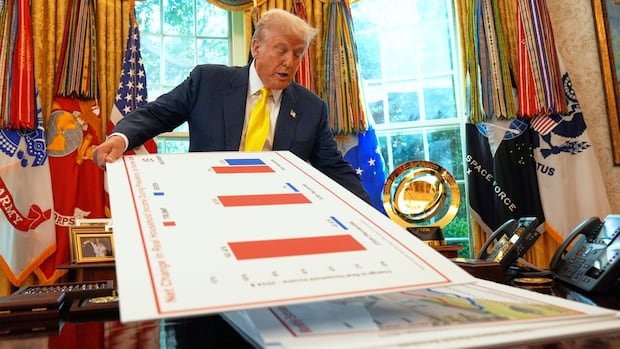

In his state of the union address in March 2025, U.S. President Donald Trump expressed optimism about the positive economic impact of tariffs, foreseeing a surge in revenue and job creation. However, the promised benefits have not materialized, with the U.S. government debt surpassing $40 trillion this month. This has led to concerns in the bond market, resulting in sustained high yields and interest rates.
Despite the lack of job growth, tariffs have had a polarizing effect, benefiting some while causing distress for others. Economists note that tariffs in the U.S. have primarily led to a significant wealth transfer from lower-income and middle-class individuals to affluent corporations and well-connected entities.
Furthermore, the implementation of tariffs aligns with the broader economic strategy of the Trump administration and the Republican Party, which has utilized tax policies to achieve similar outcomes. The impact of tariffs on different income groups has underscored the disparities in wealth distribution, favoring the affluent and larger corporations.
The distribution of tariff refunds and exemptions has favored major corporations over smaller businesses, amplifying the wealth concentration effect. The arbitrary nature of tariff exemptions and refunds, exemplified by recent Treasury payouts to businesses, has raised questions about fairness and political influence in the tariff system.
While some companies have pledged to pass on tariff refunds to consumers in the form of price reductions, economists remain skeptical about the trickle-down effect reaching consumers. Studies indicate that U.S. buyers bear the brunt of tariff costs, with little relief from refunds or exemptions for small businesses and individual consumers.
Despite the initial promise of tariffs to revitalize American manufacturing and create jobs, the reality has fallen short. Manufacturing job losses persist, with fewer jobs in the sector compared to the beginning of Trump’s second term. The combination of tariffs and tax cuts has not resolved the wealth distribution imbalance, as tariffs predominantly impact the middle class while tax cuts benefit the wealthy.
As the U.S. faces mounting debt and rising interest rates, the efficacy of tariffs in addressing fiscal challenges has been questioned. Economists emphasize the need for alternative revenue-raising measures and a reevaluation of tariff policies to promote economic stability and equitable growth.