
In recent times, the Trump administration praised the “growing influence of patriotic European parties,” but many of these parties have expressed disapproval of Trump’s aggressive pursuit of Greenland for the United States. Trump challenges Denmark’s long-standing territorial claim to Greenland, leading to outrage and intensive diplomatic efforts among European leaders spanning both liberal and traditional conservative factions.
The U.S. threats have not been well-received by far-right parties, previously viewed favorably by the administration on various issues. The current administration under Trump has indicated a departure in its approach to Europe, with Defense Secretary Pete Hegseth criticizing security in the region and Vice-President JD Vance involving himself in the domestic affairs of key European allies to a level unprecedented in recent U.S. presidencies.
Days before a German federal election last February, Vance held discussions with Alice Weidel, leader of the far-right Alternative for Germany (AfD), and contested a report by Germany’s intelligence services labeling AfD as an “extremist” group. Weidel criticized Trump for breaching a key campaign promise by interfering in other countries, while AfD co-chair Tino Chrupalla condemned what he termed as Trump’s “Wild West methods.”
Trump’s assertive statements, including not ruling out military options, have caused confusion and concern in Europe. A 1951 agreement between the U.S. and Denmark allows the U.S. to move freely and establish military bases in Greenland with Danish and Greenlandic notification. Trump hinted at imposing new tariffs on several countries over the Greenland dispute, prompting EU officials to consider countermeasures such as retaliatory tariffs and an anti-coercion instrument.
Although Britain is no longer part of the EU, Nigel Farage, instrumental in the Brexit campaign and a known ally of Trump, criticized the U.S. administration’s stance on Greenland. Farage deemed Trump’s actions as a “very hostile act” and emphasized the importance of resolving disagreements privately. Meanwhile, Republican House Speaker Mike Johnson attempted to reassure concerns during a scheduled visit marking the 250th anniversary of U.S. independence from British rule.
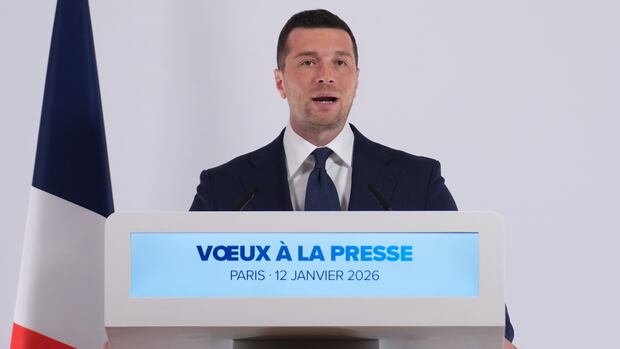
France, among the countries facing potential tariffs, has seen strained relations with Trump despite a working relationship with French President Emmanuel Macron. The U.S. President has also engaged with Macron’s opponents, including criticizing a court ruling that could prevent Marine Le Pen of National Rally (RN) from running in the next election. Jordan Bardella of National Rally expressed support for a U.S. national security strategy document, aligning with concerns over European military spending and immigration.
Italy’s Giorgia Meloni cautioned against potential tariffs, describing them as a mistake, while Hungary’s Fidesz party supported the U.S. stance, viewing Greenland as a bilateral matter between the U.S. and Denmark rather than an EU concern. Foreign Minister Peter Szijjarto emphasized the need for dialogue to resolve the Greenland issue.