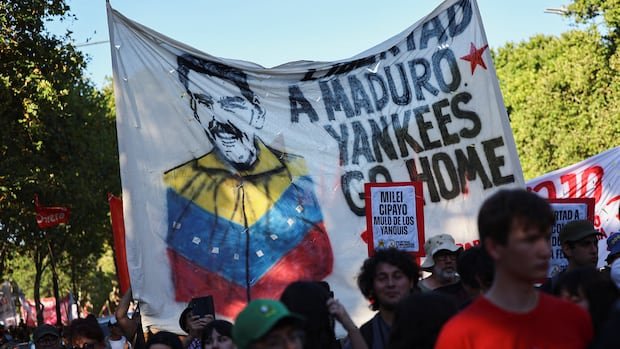

After removing Venezuelan President Nicolás Maduro over the weekend, U.S. President Donald Trump expressed confidence that American oil companies would enter Venezuela, invest heavily, and generate substantial profits for both themselves and the Venezuelan populace. He emphasized the intention to “take back the oil, frankly, we should’ve taken back a long time ago.”
Venezuela holds the largest proven oil reserves globally, but the issue of who has the authority to extract and benefit from these resources remains contentious and complex due to historical events. The country nationalized its oil sector many years ago and in 2007 expropriated the majority of U.S. oil assets, leading to the expulsion of two out of three American companies.
Legal disputes persist over the substantial sums the companies claim Venezuela owes them in compensation, casting uncertainty on their potential return. The timeline and feasibility of their reentry into the market remain unclear.
The rise of Hugo Chavez as Venezuela’s president in 1999 marked a turning point, as he pledged to diminish U.S. influence within the nation. Despite the country’s significant oil production and profits, a substantial portion was under the control of three U.S. corporations: ConocoPhillips, ExxonMobil, and Chevron.
Chavez’s move in 2007 to expand nationalization further saw these companies, along with others, compelled to cede operational control to the state oil company, Petróleos de Venezuela S.A. (PDVSA), effectively seizing their assets. This action resulted in Venezuela obtaining an 83% stake in projects within the Orinoco River Basin, a vital oil region globally.
While Chevron remained operational, ConocoPhillips and ExxonMobil departed after unsuccessful negotiations with the Venezuelan government. The latter even wrote off a substantial investment following its exit. Chevron, though subject to stringent U.S. sanctions, continues to operate under a special permit.
The expropriation stirred a prolonged battle for compensation, with ExxonMobil asserting a $10 billion claim for seized assets. After arbitration, a ruling in 2014 ordered Venezuela to pay $1.6 billion to ExxonMobil, but payment remains outstanding. ConocoPhillips, in a separate case, was granted $8.5 billion by an international arbitration court, a decision upheld in early 2025, though Venezuela has yet to fulfill the payment.
Estimates suggest that Venezuela faces liabilities exceeding $60 billion from various claims in international courts, underscoring the financial strain resulting from these disputes.
Trump’s recent declaration envisioned a swift revival of Venezuela’s oil industry by U.S. firms, yet the reality is far more intricate. The nation’s oil infrastructure has deteriorated significantly due to past administrations and external pressures, requiring substantial investments and time for restoration.
American companies must weigh the risks and rewards before reentering the Venezuelan market. Chevron, currently maintaining a workforce of 3,000 in Venezuela, prioritizes employee safety without indicating plans for expansion. ConocoPhillips refrains from speculating on future investments, citing past expropriations as a cautionary tale.
The U.S. administration’s rhetoric, asserting control over Venezuela’s affairs, indicates a shift in decision-making power concerning the nation’s oil sector. Statements from key officials imply a restrictive approach to Venezuela’s oil dealings, despite existing partnerships with major consumers like China.