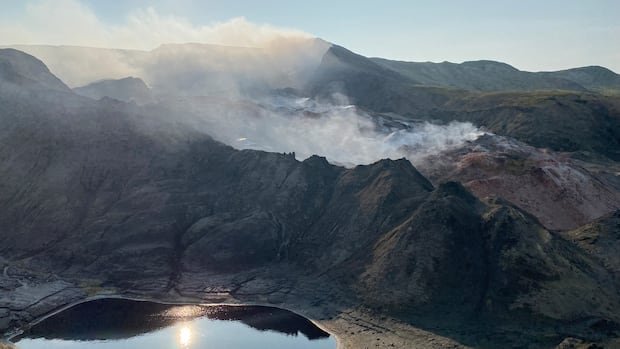

Calgary scientists have identified some of the most acidic natural water on Earth in the Northwest Territories. The melting of permafrost and land erosion from the Smoking Hills Formation, driven by climate change, is causing the release of toxic metals and highly acidic solutions into nearby bodies of water, including rivers, bays, and possibly the Arctic Ocean.
Research scientist Stephen Grasby from the Geological Survey of Canada visited the site on the north shore of the territory in 2017 and again in 2023. He was struck by the extreme toxicity and acidity present in the ponds surrounding the Smoking Hills. Grasby expressed awe at nature’s ability to produce such toxic acidic waters, surpassing anything humans could create at industrial sites.
The origin of this phenomenon lies in the release of toxic metals trapped in iron sulfide minerals, commonly known as pyrite or “fool’s gold,” around 85 million years ago during a period of volcanic activity in Arctic Canada. Previously shielded by rock layers and permafrost, the exposure of pyrite to oxygen due to land slumping has led to the release of high quantities of metals and extreme heat into the water bodies near the Smoking Hills.
Grasby observed a significant transformation in the landscape between his visits, with ponds turning black and resembling oil more than water. The high acidity levels made it challenging for their equipment to accurately measure the pH. Additionally, evidence of melted rocks suggested temperatures exceeding 1,200 degrees Celsius just beneath the surface layer.
The ongoing thawing of permafrost, exacerbated by climate change, is compounding the issue. Elliott Skierszkan from Carleton University emphasized the need to study the consequences of permafrost thawing, particularly its impact on water quality, which has only recently come under scrutiny.
The potential environmental repercussions of the Smoking Hills remain largely unknown, raising concerns about the leakage of metals into other water bodies. Grasby and Skierszkan highlighted reports of rivers in Alaska and northern Canada turning orange due to metal contamination. The impact on river ecosystems, including aquatic life and habitats, is a significant worry.
Despite some metals being beneficial in controlled amounts, others, like cadmium, were measured at levels significantly exceeding safe drinking guidelines. Grasby and Skierszkan stressed the importance of further research to fully comprehend the implications of climate change on the Smoking Hills and the surrounding pristine Arctic environment.