
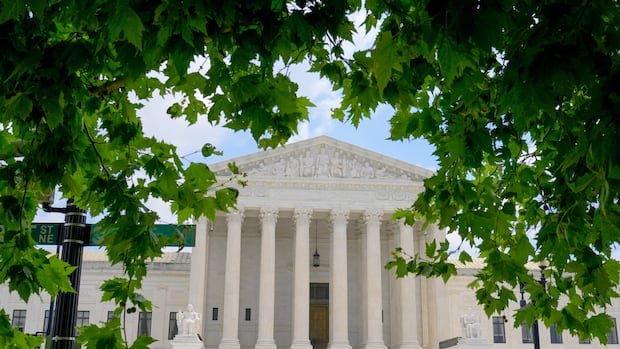

The U.S. Supreme Court has granted President Donald Trump a temporary victory in his campaign against non-citizen voting by lifting restrictions on a controversial federal voter database before the upcoming November elections. The court’s decision, with dissent from three liberal-leaning justices, allows states to utilize the Department of Homeland Security’s Systematic Alien Verification for Entitlements (SAVE) program to verify voter eligibility on their rolls. While the impact on the midterms is expected to be limited due to existing laws preventing systematic purging of voters close to an election, states may still find the SAVE program useful alongside other tools to maintain updated voter lists.
The Supreme Court’s action suspends a federal judge’s ruling from June that deemed the administration’s revised SAVE program illegal, which was previously blocked for violating privacy rights and potentially leading to wrongful removal of voters from the rolls. The majority opinion cited a 1996 law permitting DHS to access citizenship and immigration information from other federal agencies, emphasizing the government’s duty to assist states in verifying citizenship.
Justice Ketanji Brown Jackson, along with Justices Elena Kagan and Sonia Sotomayor, dissented, expressing concerns about potential voter registration errors and emphasizing the importance of safeguarding lawful voters’ rights. Plaintiffs and their legal team criticized the ruling for endangering millions of Americans with the administration’s voter purge database. They vowed to continue defending voting and privacy rights based on the previous district court decision.
The SAVE program, initially established under immigration law to prevent non-citizens from receiving government benefits, has faced criticism for its expanded search capabilities potentially leading to the erroneous removal of valid voters. Instances of citizens being wrongly flagged have already been reported, raising concerns about the accuracy and impact of the database. Despite the program’s temporary halt, DHS has continued utilizing data from the Social Security Administration to investigate potential illegal voting activities.
President Trump’s efforts to overhaul election procedures, including attempts to create a national voter list, have faced legal challenges, as states and Congress hold authority over election rules. Research indicates that non-citizen voting is rare and illegal, punishable by potential deportation, despite the President’s persistent claims of widespread non-citizen voting in U.S. elections.