
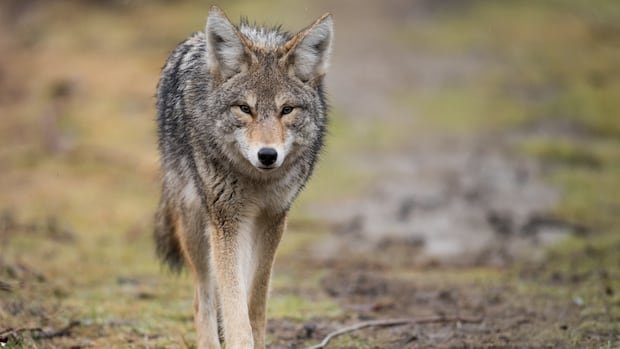

A recent study has highlighted the potential risks to human and animal health when individuals experiencing homelessness share urban spaces with coyotes. The study, conducted in Edmonton’s river valley and published in Frontiers in Ecology and the Environment, explored the relationship between homeless encampments and urban coyotes.
The research, part of the Edmonton Urban Coyote Project led by the University of Alberta, revealed that homeless individuals and coyotes often live in close proximity. This proximity leads to competition for space and resources, creating a risky environment that can increase human-coyote conflicts and the transmission of infectious diseases from animals to people.
Lead author Sage Raymond emphasized that this situation presents multiple challenges, with coyotes accessing food from encampments and people being exposed to potential disease agents. The study suggests that similar dynamics may be occurring in other North American cities where poverty and urban coyotes intersect.
The study found that individuals sleeping near coyote dens face higher risks of dangerous encounters and contracting infectious diseases from the animals, including a parasite prevalent in Alberta’s coyote population. Additionally, coyotes near encampments may become habituated to human food, potentially leading to aggressive behavior and posing a nuisance to nearby communities.
Despite these findings, the study does not advocate for crackdowns on homeless populations or coyote culls. Instead, the researchers recommend targeted conservation efforts, awareness campaigns, and improved medical care for vulnerable groups.
The Edmonton Urban Coyote Project, which has been monitoring the city’s coyote population since 2009, estimates that around 3,000 coyotes inhabit Edmonton. This urban coyote population relies on the North Saskatchewan River valley, where many homeless encampments are situated each year.
Colleen Cassady St. Clair, a wildlife biologist involved in the project, highlighted the long-standing overlap between coyotes and encampments in their fieldwork. The study underscores the ecological dangers of encampments attracting coyotes, leading to increased access to human food and decreased wariness of the animals toward people.
The study also raises concerns about the transmission of diseases from coyotes to humans, particularly alveolar echinococcosis, a parasitic infection found in Edmonton’s coyote population. This parasite poses significant health risks to individuals living outdoors, especially those with limited access to hygiene facilities and compromised immune systems.
Darcy Visscher, a biologist specializing in urban ecology, emphasized the heightened risk faced by Edmonton’s homeless population due to the parasite’s potential fatality rate. The study aims to raise awareness and prompt actions to address infection rates and improve outreach efforts with frontline agencies.
In conclusion, the study calls for enhanced healthcare programs, hygiene supplies for encampments, and education on safe practices to deter coyotes. Ultimately, providing secure housing for all individuals is seen as a critical solution to mitigate the risks associated with human-coyote interactions and homelessness.