
Researchers and a public health official in Newfoundland and Labrador are keeping a close eye on the potential threat of mosquito- and tick-borne diseases in the region. A recent study conducted by Memorial University aimed to identify the mosquito species present in the province and the viruses they carry. Atanu Sarkar, a lead scientist on the study, highlighted the impact of climate change on local mosquito populations, emphasizing the role of global warming in facilitating the spread of these disease-carrying insects.
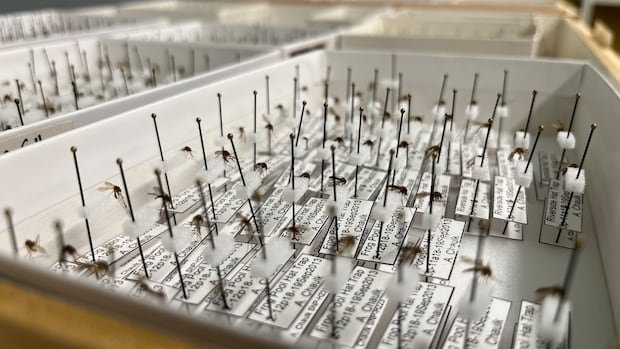
The study engaged 182 residents in Newfoundland and Labrador, as well as in Saint Pierre and Miquelon, in a citizen science project. Participants were provided with training and equipment to collect mosquito samples, resulting in the collection of approximately 3,500 specimens over the course of 2018 and 2019. The findings, delayed due to the COVID-19 pandemic, were released in the summer of 2025, revealing the presence of invasive mosquito species well adapted to the province’s climate, along with identified viruses capable of human transmission, including Snowshoe hare and Jamestown Canyon virus.
Sarkar emphasized that this study marked the first mapping of mosquito and virus distribution in the province, a significant advancement in understanding the local disease ecology. The research team also noted the introduction of new mosquito species to the region, likely facilitated by changing weather patterns and increased international travel and trade. Both Sarkar and fellow researcher Tom Chapman stressed the need for further research to identify high-risk areas for these diseases, allowing for targeted public health recommendations.
Regarding Lyme disease, a concern often raised by residents due to tick bites, Hugh Whitney, former chief veterinary officer of Newfoundland and Labrador, highlighted the gradual northward movement of black-legged ticks in the region. While these ticks can carry the bacteria responsible for Lyme disease, Whitney noted the challenge of establishing permanent tick populations due to the absence of native host animals. Despite the presence of ticks carrying Lyme disease, there is currently no evidence of sustained tick populations in the province.
Dr. Janice Fitzgerald, the province’s chief medical officer of health, emphasized the importance of ongoing surveillance for both mosquito-borne viruses and Lyme disease, noting that while cases are rare, they can lead to significant illnesses. She urged the public to take preventive measures such as using insect repellent, wearing protective clothing, and eliminating standing water to reduce mosquito breeding sites. With no vaccines currently available, preventive actions remain crucial in mitigating the risk of mosquito- and tick-borne diseases.