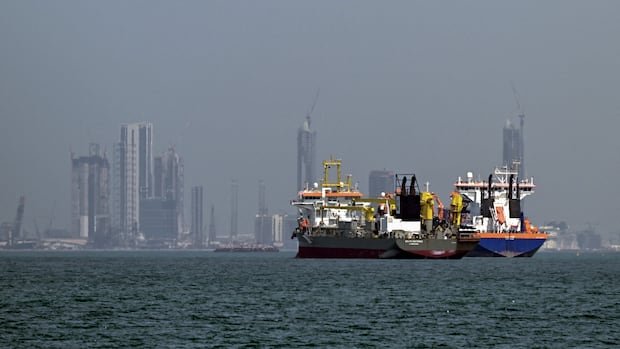

The ongoing conflict in the Middle East around the Strait of Hormuz has posed significant risks to merchant ships and their crews. Since the U.S. and Israel initiated military actions against Iran on February 28, there have been attacks on thirteen vessels in the strait, resulting in the loss of at least seven crew members. Phillip Belcher, the marine director for Intertanko, expressed concerns about the dangerous conditions, referring to the area as the most perilous in the world presently. Seafarers are reportedly anxious, witnessing missiles passing overhead and uncertain about potential attacks on their ships.
Iran, which shares borders with the Strait of Hormuz, has issued warnings about blocking oil exports during the conflict, causing heightened fear among merchant ships and crews. As a result, marine traffic in the strait has drastically decreased, with just four ships passing through on a recent day compared to an average of 151 ships in February. This disruption has effectively halted the crucial passage for ships traveling from the Persian Gulf to the open sea.
In response to the heightened risks, some vessels are resorting to tactics such as altering tracking data to appear linked to China or turning off their automatic identification system transponders to avoid detection. However, navigating the narrow 32-kilometer-wide strait remains challenging, with Iranian spotters closely monitoring ship movements.
The escalating situation has left hundreds of vessels stranded in the Persian Gulf, impacting approximately 20,000 seafarers in the region, as reported by the International Maritime Organization. Apart from oil tankers, cargo ships carrying various goods, food, and chemicals are also affected. Shipping companies like Hapag-Lloyd are facing difficulties in planning routes due to the high risks involved, leading to increased insurance costs and operational uncertainties.
While U.S. President Donald Trump proposed naval escorts for safe passage through the strait, concerns persist about the dangers posed by potential sea mines deployed by Iran. Despite no confirmed evidence of mine deployment so far, the looming threat raises significant concerns about the long-term disruption to maritime trade in the region.
With no clear resolution in sight, experts emphasize the need for an end to hostilities to restore normal shipping operations. The prolonged crisis is taking a toll on seafarers who are stranded at sea, facing heightened risks and anxieties. The International Transport Workers’ Federation highlights the vulnerability of seafarers, many of whom come from developing countries and are now caught in a precarious situation due to the conflict. The federation stresses the importance of ensuring the safety and well-being of these workers amid the ongoing crisis.