
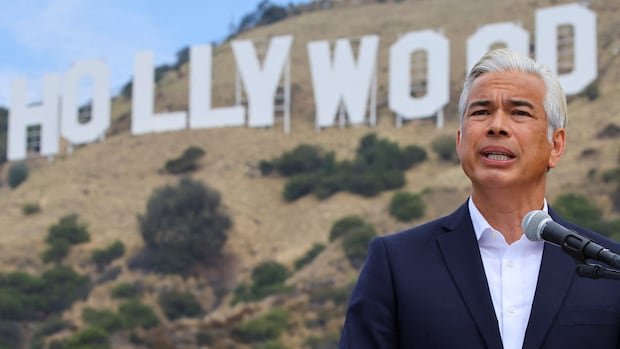

Twelve states filed a lawsuit on Monday to halt the $81 billion merger between Paramount and Warner Bros. Discovery, citing concerns that the deal would stifle competition in Hollywood and limit choices for consumers nationwide. California Attorney General Rob Bonta, leading the legal action, stated in a press conference in Los Angeles that the merger would result in increased prices, reduced content variety, and lower quality entertainment.
The consolidation of Paramount and Warner would unite two of the last five major studios in Hollywood and combine Warner’s HBO Max, renowned libraries including “Harry Potter,” and CNN with Paramount’s CBS and Paramount+ streaming service. The states argue that such a merger would harm movie theaters, cable distributors, and consumers. They are urging the companies to postpone the merger until the legal process concludes, threatening to seek a temporary restraining order if necessary.
Paramount defended the merger, claiming it complies with antitrust laws and would enhance competition against dominant streaming platforms. The company, recently acquired by Skydance, vowed to vigorously defend the merger. Warner declined to comment on the lawsuit. Apart from California, states joining the legal challenge include Arizona, Colorado, Connecticut, Massachusetts, Minnesota, Nevada, New Jersey, New Mexico, New York, Oregon, and Washington.
The lawsuit comes at a critical juncture for the Paramount-Warner deal, which received shareholder approval in April after a public bidding war with Netflix and was cleared by the Trump administration last month. The companies aimed to finalize the merger in the third quarter of the year but may face delays due to the legal action. Paramount has offered compensation to shareholders if the process extends beyond September 30. The companies have touted regulatory clearances in various countries but face ongoing reviews in the EU and the UK.
Despite claims by Warner and Paramount that the merger would benefit consumers by providing more content, critics warn of increased industry consolidation. The legal challenge underscores concerns that a combined Paramount-Warner entity would wield significant market power, potentially impacting jobs and businesses. The deal has faced opposition from industry professionals and groups like the Writers Guild of America.
Political implications have also surfaced during the merger process, with criticism leveled at the Justice Department’s decision not to challenge the deal. Some attorneys general criticized the close ties between Paramount’s CEO and the president, suggesting political influence in the merger approval. The DOJ has defended the merger, emphasizing its potential to boost competition and benefit consumers and workers. The future ownership of CNN under Paramount has drawn attention, with some Trump administration officials expressing preferences for the network’s future.