
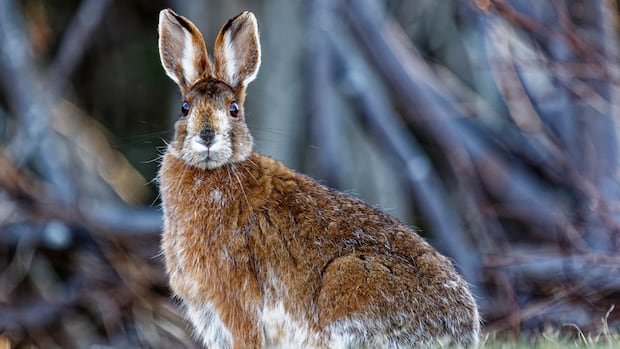

Snowshoe hares have become more prevalent on Prince Edward Island following post-tropical storm Fiona, according to a wildlife biologist in the province. Garry Gregory from P.E.I.’s fish and wildlife division mentioned an increase in sightings of what some Islanders mistake for “rabbits” in their yards. However, these animals are actually snowshoe hares, not native rabbits.
While there is no formal data tracking the snowshoe hare population increase, Gregory suggested that changes in the landscape post-Fiona make it reasonable to assume a rise in numbers. The storm aftermath left behind tangled debris in forests and woodlots across P.E.I., providing ideal escape cover for hares. This cover, which includes brush piles and fallen trees, makes it difficult for predators to access the hares.
The storm also led to new growth in the forest, benefiting the hares’ winter food sources. The downed trees allowed sunlight to reach the forest floor, fostering early successional plants like willows, grey birch, and maples, which hares feed on during the colder months. This new habitat not only supports hares but also benefits other wildlife such as songbirds and grouse.
Despite the increase in hares, Gregory noted that it does not necessarily mean a surge in predators on the island. Unlike in northern Canada where predator populations are linked to hare cycles, P.E.I. predators are generalists and consume a variety of prey.
For Islanders encountering hares in their yards, Gregory advised against feeding them. Hares typically avoid humans and have abundant natural food sources in summer. Feeding them could lead to unwanted encounters with pets, such as dogs. Additionally, Gregory addressed concerns about hares carrying ticks, stating that the tick species found on hares in P.E.I. are not the ones associated with Lyme disease and pose minimal health risks to the animals.
Overall, the increase in snowshoe hares on Prince Edward Island post-Fiona is a natural response to the changing landscape and presents both challenges and benefits for the local wildlife population.