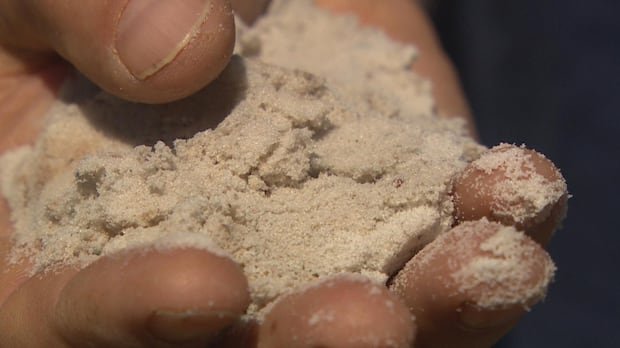

An Alberta company aiming to mine silica sand in Manitoba is collaborating with the University of Manitoba on creating a cutting-edge groundwater monitoring network. This partnership focuses on utilizing advanced technology to enhance global groundwater research efforts.
Sio Silica’s president, Carla Devlin, revealed that the company will engage in a feasibility study with the university to develop a sophisticated and non-invasive system for real-time monitoring of aquifer conditions. The objective is to not only benefit their mining project but also contribute to responsible resource management practices across the province.
The initiative comes as Sio Silica renews its pursuit to extract sand from the sandstone aquifer beneath the Rural Municipality of Springfield in southeastern Manitoba. Previously, in 2024, the company’s request for a sand extraction license was denied by the NDP government due to concerns regarding water quality impacts and potential subsurface hazards.
Originally, Sio Silica had proposed a large-scale project involving drilling numerous wells over a span of 25 years to extract silica sand for various industrial purposes. However, the plan faced strong opposition from the community over environmental worries and potential water contamination risks.
In response, Sio Silica revised its strategy by proposing fewer wells, a more gradual approach, and reduced sand extraction in a renewed attempt to secure an environmental license. The collaboration with the University of Manitoba is a separate endeavor from the license application but is seen as a step towards transparency and enhanced project development.
Carla Devlin emphasized that the research partnership aims to gain a comprehensive understanding of the aquifer system. By implementing advanced monitoring techniques and promoting open data sharing, the project seeks to ensure informed decision-making based on scientific evidence and long-term environmental stewardship.
The research project, termed a “game changer” by Sio Silica’s technology team, will provide an in-depth analysis of the southern Manitoba aquifer, generating valuable groundwater data that would be costly for the government to replicate independently.
Leading the research project, Ricardo Mantilla, an associate professor at the University of Manitoba, highlighted the use of quantum gravimetry technology to measure changes in the gravitational field as groundwater moves. While this technology can determine groundwater quantities, it does not assess water quality.
Mantilla stressed the significance of the project not only for Sio Silica but also for the entire province, emphasizing the importance of understanding the interactions between surface water and groundwater in Manitoba’s water cycle.
Hydrogeologist Landon Halloran noted the growing global use of quantum gravimetry in developing new groundwater monitoring devices. This technology, while beneficial for large-scale assessments, may not provide detailed insights for local issues. Halloran suggested that gravimetry could potentially reduce the need for costly groundwater monitoring wells, aligning with Sio Silica’s goal of drilling fewer wells.
In conclusion, groundwater, though invisible, is a vital natural resource that requires protection and monitoring. Halloran emphasized the importance of safeguarding groundwater as a fundamental component of the water cycle and a crucial source of drinking water for many communities.