
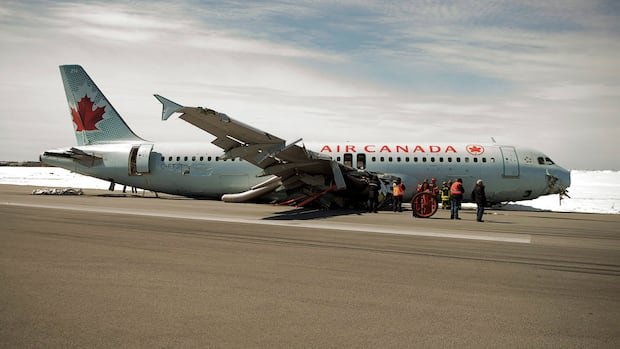

The settlement in the class-action lawsuit over the crash landing of an Air Canada flight in Halifax over a decade ago has been approved by the Supreme Court of Nova Scotia. The incident occurred in March 2015 when Air Canada Flight 624 from Toronto, carrying 133 passengers, encountered a snowstorm at Halifax Stanfield International Airport. The plane struck power lines, causing it to land about 200 meters short of the runway and injuring 25 passengers.
As part of the settlement, Air Canada, Nav Canada, and the Halifax International Airport Authority have agreed to pay a total of $18,075,000, covering legal fees and expenses. Air Canada will contribute over $15 million, Nav Canada will pay $2 million, and the Halifax International Airport Authority’s share is $1 million. The settlement does not imply any admission of liability by the defendants.
Nav Canada expressed satisfaction with the court’s approval of the settlement, emphasizing the positive resolution for all parties involved. The airport authority acknowledged the lengthy process and expressed concern for those affected. Air Canada spokesperson Sean Davidson stated that the company is content with the resolution reached through the agreement.
The settlement involves more than $5 million for legal fees and nearly $900,000 for experts and professionals who provided opinions on the case. The Transportation Safety Board’s investigation report highlighted various factors contributing to the crash landing, including issues with runway lighting and the pilots’ failure to account for a headwind that deviated the plane from its intended path.
Despite the challenges faced during the settlement process, including legal battles for access to critical evidence, the class members will now receive their compensation promptly. The amount of compensation varies depending on the extent of injuries sustained by individuals, ranging from minor injuries to more severe conditions like post-traumatic stress.
Following the crash, improvements have been made to the airport’s navigation and lighting infrastructure. Passengers’ wait for emergency responders, as well as issues with standby generators at the airport, were also highlighted in the aftermath of the incident. The report emphasized the delays caused by severe weather conditions and technical failures in the evacuation process.