
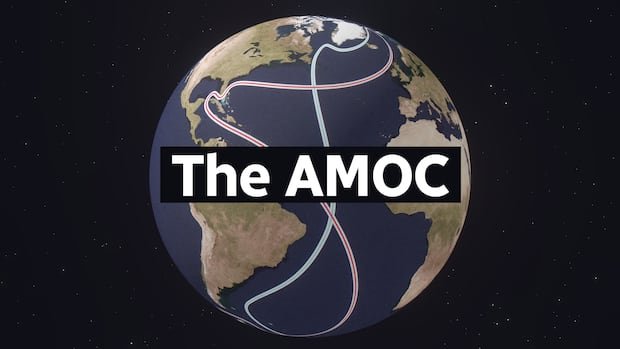

The movie “The Day After Tomorrow” portrayed a scenario of abrupt climate changes leading to an ice age, driven by the Atlantic Meridional Overturning Circulation (AMOC) shutdown. While the film was fictional, the scientific basis behind the climate shift is real. Scientists are now increasingly alarmed by the slowing of the AMOC and its potential global repercussions.
The AMOC is a crucial part of the ocean current system, functioning as a global conveyor belt that moves warm surface water into the North Atlantic, where it sinks, circulates southward, and resurfaces. This circulation of heat, water, and carbon plays a vital role in regulating global weather patterns and supporting marine ecosystems.
Recent research, including a study by the University of Miami, indicates that the AMOC has already slowed by 10 to 20 percent over the past two decades. Climate models have long predicted this slowdown, attributing it to global warming impacting the density of ocean waters. The study suggests that under a mid-range greenhouse gas emissions scenario, the AMOC could slow by 51% by 2100.
The potential consequences of an AMOC slowdown or shutdown are dire, affecting global agriculture, food production, climate, weather patterns, ecosystems, and sea levels. Sea-level rise predictions for the North Atlantic region range from 1 foot to 1 meter, posing significant risks to coastal areas. Researchers emphasize the urgent need for more data collection and research on the AMOC to better understand and prepare for the impending changes.
To mitigate these risks, experts stress the importance of adhering to the Paris climate agreement and transitioning away from fossil fuels as swiftly as possible. This proactive approach is seen as crucial in safeguarding future generations from the impacts of AMOC disruptions.