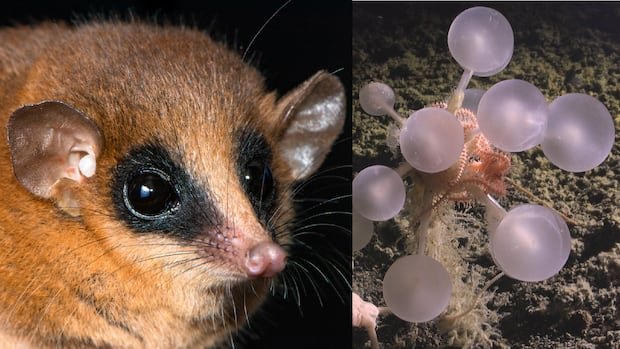

In 2025, a variety of intriguing new species were unveiled by science, including a spider boasting elongated genitalia, a predatory caterpillar adorned with prey parts, and a pint-sized mountain-dwelling opossum. Recent findings suggest that approximately 16,000 new species are uncovered annually, with a notable acceleration in this discovery rate. Over the past two decades, 15 percent of all known species have been freshly documented.
John Wiens, an ecology professor at the University of Arizona and co-author of a study on this subject, highlighted that the pace of new species identification surpasses the rate of species extinctions. While some of these species were previously known locally or archived in museums, official recognition by science is crucial for conservation efforts. Wiens emphasized the necessity of acknowledging a species’ existence to prevent its extinction.
Among the new discoveries are four tarantula species from the Horn of Africa and Arabian Peninsula, with males sporting the lengthiest genitalia seen in tarantulas. The largest of these, Satyrex ferox, boasts a leg-span matching a slice of bread and male palps nearly as long as their legs, potentially aiding in safe mating practices.
A unique caterpillar in Hawaii, dubbed the “bone collector,” feasts on trapped prey in spider webs, fashioning a coat from their remains. Discovered in a limited forest area, this species, which transforms into a moth, presents a concerning conservation status due to its restricted habitat.
In the depths of the Southern Ocean, a carnivorous sponge known as the “death-ball” sponge was discovered, employing spheres with tiny hooks to capture prey. Additionally, new sea star species and an iridescent scale worm were among the 30 new species found in this region.
From shallower waters, a sea slug resembling fried eggs, Phyllidia ovata, was identified in Indonesia, while the endangered Okanagan crayfish, distinct from its common counterpart, emerged in Canada’s Okanagan Lake. Canadian researchers contributed to the unveiling of six tube-nosed bat species from the Philippines, showcasing their diminutive size and unique features.
The roster of new species includes reptiles such as the Pinocchio chameleon from Madagascar and the Lycodon irwini snake from India’s Great Nicobar Island, named after the late Steve Irwin. A small mouse opossum, Marmosa chachapoya, inhabiting the Peruvian Andes, was also documented in 2018.
In Tanzania’s Eastern Arc Mountains, tree-dwelling toads were identified, bypassing the tadpole stage by giving birth to live toadlets, an uncommon trait among amphibians. These new species, including critically endangered ones, were differentiated through genetic and physical analyses of museum specimens initially presumed to be identical species.