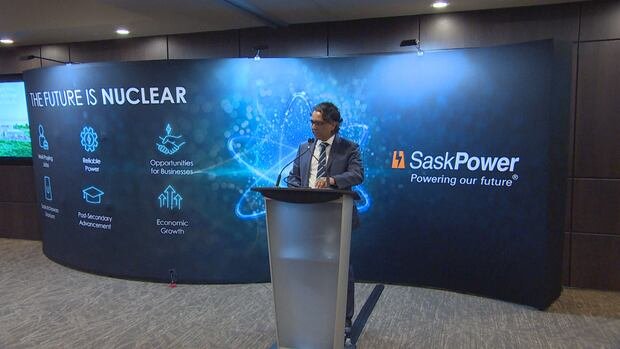

The government of Saskatchewan and SaskPower have committed to exploring options for constructing a substantial nuclear reactor within the province. While some argue that a nuclear reactor could bring economic benefits, others raise concerns about the financial implications and environmental considerations that should be carefully weighed. Let’s delve into the key aspects of the discussion.
Nuclear reactors serve as the heart of a nuclear power plant, regulating nuclear chain reactions that generate heat through fission, producing steam to drive a turbine for electricity generation. The proposed reactors would be fueled by uranium extracted from Saskatchewan, offering the potential to produce significant amounts of electricity, especially from a large-scale facility.
The conversation surrounding Saskatchewan’s role in the future of nuclear energy has broadened, with proponents highlighting the potential economic advantages. They suggest that a major nuclear facility could create numerous job opportunities and facilitate the exportation of Saskatchewan’s energy to other provinces, such as Alberta. Jeter Hall, the director of the Sylvia Fedoruk Canadian Centre for Nuclear Energy, emphasized the need for new transmission lines to facilitate the electricity transfer to neighboring jurisdictions.
Despite the focus on large reactors, the province remains committed to developing small modular reactors (SMRs) while exploring the feasibility of a larger reactor. SMRs are anticipated to cost between $3 billion and $5 billion per unit. Hall noted that constructing a single large reactor could prove more cost-effective than multiple SMRs, citing the proven technologies and economic efficiency associated with larger-scale reactors globally.
Advocates envision Canada leading the way in utilizing nuclear energy for urban power supply, with Saskatchewan potentially hosting some of the first modular reactors in the country following Ontario’s initiatives. George Christidis, president and CEO of the Canadian Nuclear Association, emphasized the need for federal support for such endeavors.
On the other hand, critics caution that a large reactor could impose a substantial financial burden on Saskatchewan taxpayers. Peter Prebble, a director of the Saskatchewan Environmental Society, highlighted the multi-billion-dollar cost of similar projects in the U.S. and expressed concerns about the environmental impact. He suggested that alternative energy sources like solar or wind power could offer more cost-effective and eco-friendly solutions.
Past proposals for nuclear reactors in Saskatchewan faced challenges related to costs and environmental uncertainties, with concerns over radioactive waste disposal and water supply requirements. While the specific site and funding details for a large reactor in Saskatchewan are yet to be announced, the discussion continues, with Estevan currently identified as a probable site for a small modular reactor.