
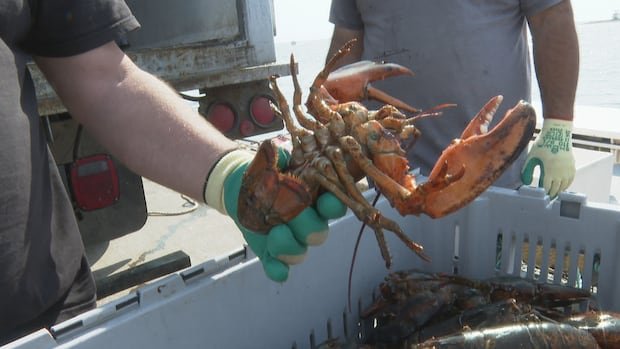

Pointe-du-Chêne is currently a popular fishing destination, with anglers casting their lines off the pier and commercial vessels harvesting lobster from the Northumberland Strait.
Peter Wallace, a seasoned fisherman with almost five decades of experience, is continuing a family tradition that began in 1917 when his grandfather acquired a lobster license for a mere 25 cents. Today, obtaining such a license would cost a newcomer to the industry approximately $1 million, according to Wallace. Moreover, the purchase of a “half-decent” boat can range from $700,000 to $1.2 million.
Industry insiders reveal that the high costs of entry make fishing inaccessible to many, as banks are hesitant to provide full financing. Consequently, seafood buyers and processors are stepping in to bridge the financial gap, often requiring fishers to relinquish their license rights and privileges through controlling agreements.
Martin Mallet, the executive director of the Maritime Fishermen’s Union, expressed concern over the increasing prevalence of these agreements, stating that they effectively render the fisherman subservient to the third-party corporation, leading to various issues, including safety risks on the water.
Fisheries and Oceans Canada highlighted instances where fishers are left with minimal income due to loan repayment terms, with up to 60% of revenue going towards loan repayment. Clauses signaling controlling agreements include default conditions tied to catch landing locations and lenders influencing daily fishing decisions and license succession.
While the department rejects transfers that exhibit such clauses, informal arrangements still occur. Fisheries and Oceans Canada is currently engaging fishers and the public to enhance and clarify regulations surrounding these agreements.
The issue of controlling agreements is garnering attention at various levels, with estimates suggesting a significant portion of the fleet may be under such agreements. Concerns are mounting that unless addressed, Atlantic fishers may face similar challenges to their West Coast counterparts, where corporate control predominates.
Preserving the independence of the fishing fleet is a priority for many, as seen in their support for measures to prevent control transfer to fish processors. Calls for a national public financing program akin to Farm Credit Canada for farmers are emerging to assist new entrants and sustain the fishing industry for the future.