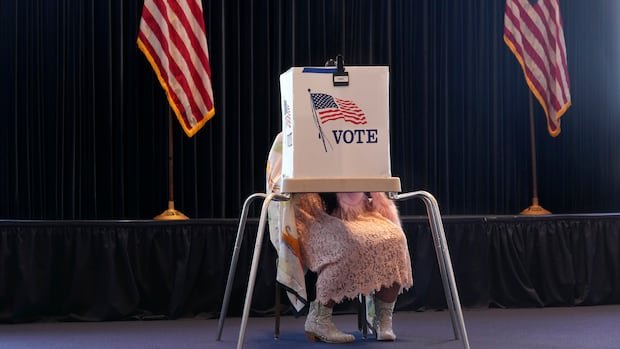

A recent Gallup poll of over 15,000 U.S. adults has revealed a noteworthy shift in American political affiliations amid heightened polarization in the country. The survey, conducted throughout 2025, indicates that a record 45% of Americans now identify as political independents, eschewing ties to either the Republican or Democratic parties. This rise in independent voters signals a growing disenchantment with traditional party politics, potentially concentrating influence among a smaller group of steadfast voters and perpetuating a cycle of polarization that may further alienate potential voters.
Chad Peace, a political consultant and legal advisor to the Independent Voter Project, a non-profit organization advocating for unaffiliated voters’ engagement in elections, believes that the current U.S. political landscape incentivizes polarization, deterring more individuals from aligning with established parties. Peace highlights issues like gerrymandered districts and exclusive primaries as key factors contributing to voter disengagement.
Jared McDonald, an assistant professor of political science at the University of Mary Washington, notes that independent voters are often less politically active, leading to heightened influence wielded by the extreme factions within both major parties. Gallup’s data, tracked since 1988, shows a surge in independent voter identification post-2008 and particularly following Donald Trump’s presidency, attributed in part to changing political behaviors among younger generations less inclined to align firmly with a single party.
The latest polling reflects a shift in political identification trends among younger Americans, with millennials and Gen Xers increasingly identifying as independents as they age. According to Gallup, the current cohort of young adults, particularly Gen Z, exhibits a higher propensity for independent affiliation compared to previous generations.
McDonald underscores that while young individuals display interest in politics, they are averse to the entrenched polarization characterizing the two major parties. The polling methodology involved telephone interviews throughout 2025, querying respondents on their party identification. Among those surveyed, 45% identified as independents, while an equal proportion aligned with either the Democratic or Republican party at 27% each.
Furthermore, the poll revealed that among independent identifiers, 20% leaned towards the Democratic party, 15% towards the Republican party, and 10% remained unaligned. In the 2024 presidential election, independent voters were evenly split between the candidates, Donald Trump and Kamala Harris, as per data from the Pew Research Center. McDonald emphasizes that for many voters, their leanings are driven more by opposition to a particular party than by genuine affiliation.