
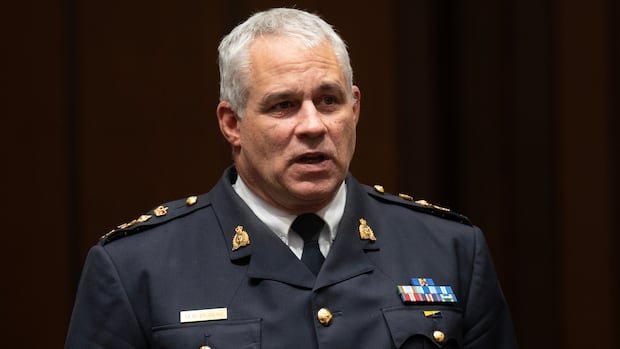

The head of the RCMP, Commissioner Mike Duheme, has issued a formal apology for an extensive surveillance initiative that targeted numerous Indigenous individuals. This marks the first acknowledgment by Duheme following a CBC Indigenous report on RCMP surveillance activities dating back to the late 1960s against Indigenous leaders and groups.
In a statement released on Wednesday, Duheme expressed deep regret for the troubling history that continues to impact Indigenous Peoples, families, and communities in Canada. He emphasized the need to acknowledge the lasting effects of these actions and the importance of addressing them today.
Duheme announced plans to convene a meeting with Indigenous leaders and elders, alongside Public Safety Minister Gary Anandasangaree, to discuss healing and ways to foster a stronger relationship. He highlighted the evolution of the RCMP over the years but acknowledged the ongoing necessity for further actions to be taken.
The call for accountability and reconciliation from Indigenous leaders and Anandasangaree followed an extensive CBC Indigenous investigation that uncovered the RCMP Security Service’s covert surveillance, use of informants, and countersubversion activities against Indigenous rights movements from 1968 to 1982. The RCMP Security Service, which operated until 1984, has since been succeeded by the Canadian Security Intelligence Service (CSIS).
Anandasangaree initiated discussions with the RCMP commissioner to outline an appropriate response to address the concerns raised by the surveillance program. He expressed deep concern over the revelations and pledged to collaborate with Indigenous leaders to ensure justice for those affected by the RCMP’s actions, which were sanctioned by the federal government.
The surveillance program, dubbed the “Native extremism program,” initially aimed to target extremist groups but inadvertently ensnared legitimate Indigenous organizations engaged in lawful advocacy. Nearly 6,000 declassified documents obtained by CBC Indigenous revealed the extent of the RCMP’s infiltration and disruption tactics against Indigenous groups.
The records verified that the federal government endorsed and facilitated the RCMP program, including approving wiretaps on the National Indian Brotherhood (now known as the Assembly of First Nations) in Ottawa. This revelation sparked outrage among Indigenous leaders, with calls for a thorough investigation through a public inquiry into systemic racism in policing, in addition to demands for public apologies from the public safety minister and prime minister.
Assembly of First Nations Chief Cindy Woodhouse Nepinak condemned the surveillance program as unacceptable and emphasized the need to prevent the recurrence of such intrusive activities targeting Indigenous communities. Natan Obed, President of Inuit Tapiriit Kanatami, stressed the importance of addressing these historical wrongs and seeking assurances that similar actions are not ongoing in 2026.
The RCMP’s espionage operation shifted its focus in 1978 towards foreign involvement in Indigenous rights movements before CSIS revived the program in 1988. CSIS, acknowledging a trust deficit with Indigenous communities, emphasized their commitment to rebuilding relationships and undertaking investigations only when there are credible threats of serious violence.
In a related case, the privacy commissioner reprimanded the federal government in 2013 for spying on First Nations advocate Cindy Blackstock, who had filed a human rights complaint regarding underfunding in First Nations child and family services. Blackstock expressed shock and dismay at the surveillance, highlighting the chilling effect on activism and the need for stringent government oversight to prevent such intrusions on human rights defenders.
NDP public safety critic Jenny Kwan called for public hearings on the RCMP surveillance program and the release of all remaining files related to the surveillance of Indigenous individuals. The extensive volume of potentially relevant files underscores the magnitude of the issue and the imperative for transparency and accountability moving forward.