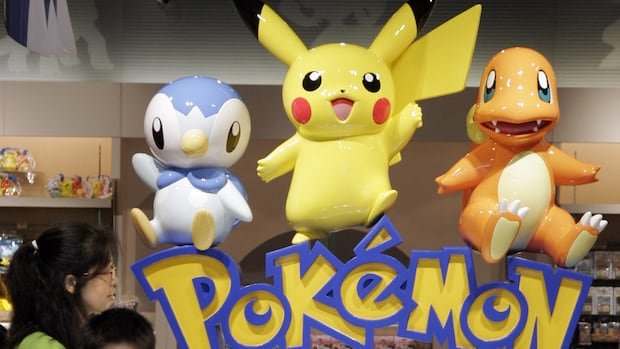

Satoshi Tajiri, as a young boy, had a keen interest in collecting and playing with insects in his backyard. Growing up, his passion for arcade video games led him to merge these interests, resulting in the creation of one of the world’s most significant franchises.
Matt Alt, a writer based in Tokyo and the author of “Pure Invention: How Japan Made the Modern World,” described Pokemon as almost a way of life now. This month marks the 30th anniversary of Tajiri’s brainchild, Pokemon, which commenced its celebrations with a Super Bowl advertisement featuring celebrities like Maitreyi Ramakrishnan, Lady Gaga, Trevor Noah, Jisoo, and Lamine Yamal sharing their favorite Pokemon.
Since its debut in 1996, Pokemon has emerged as the top-grossing media franchise globally, surpassing renowned franchises such as Star Wars, the Marvel Cinematic Universe, and Harry Potter, amassing over $100 billion US in revenue with $12 billion US in profits reported for 2024 according to License Global.
The success of Pokemon is attributed to its video games, trading cards, and anime series, transforming it into an economic powerhouse and a means of soft power enhancing Japan’s global influence.
Tajiri initiated the development of a Nintendo Game Boy game in 1990 featuring 150 creatures for catching, collecting, and battling, culminating in the release of Pokemon Red and Green in Japan on February 27, 1996. Nintendo recognized the potential of the franchise and expanded it into comic books, a cartoon series, and trading cards, creating a fully formed media ecosystem by the time Pokemon reached North America in 1999.
Hanine El Mir, who started playing Pokemon games with her brother at a young age, has been captivated by the franchise ever since, studying video games at Concordia University in Montreal. The nostalgic appeal of Pokemon games transports her to carefree times spent playing endlessly during the summer.
The value of Pokemon cards has soared over the years, inspiring scalpers to hoard and resell them for substantial profits. The introduction of Pokemon Go, an augmented reality app that took the world by storm, allowed users to catch Pokemon in real-world settings by exploring their surroundings.
Pokemon’s global popularity has positioned it as a soft power, subtly influencing cultural references and perceptions worldwide. The franchise’s impact extends beyond entertainment, contributing to Japan’s soft power through video games, anime, and food culture.
As Pokemon commemorates its 30th anniversary, the challenge lies in sustaining relevance as nostalgia wanes among older fans. However, the franchise’s diverse appeal, from collecting to battling, continues to attract a broad audience globally, a testament to Satoshi Tajiri’s enduring vision and passion. Pokemon has transcended its Japanese origins to become an integral part of global culture.