
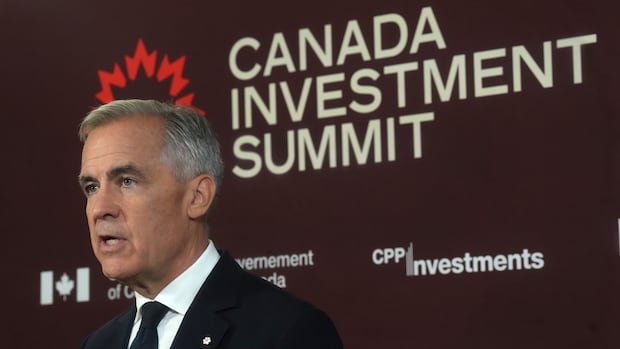

At Prime Minister Mark Carney’s investment summit in Toronto this week, there was a notable focus on proposed fossil fuel ventures, including the West Coast oil pipeline exceeding $35 billion and the Ksi Lisims LNG terminal valued at $28.5 billion. However, the summit’s agenda also featured significant discussions on climate technology.
Various climate-friendly initiatives such as energy storage, grid enhancements, nuclear undertakings, and renewable energy sources like wind and solar were highlighted in the summit’s deal book. This emphasis reflects Carney’s prior work promoting environmentally conscious policies within the global financial sector and aligns with the growing interest of international investors in sustainable investments.
David Pickup, director of the Pembina Institute’s electricity program, highlighted the global trend of clean energy investments surpassing those in fossil fuels. The hope is that attracting major investors to Canada will stimulate interest in the country’s renewable energy sector and secure the substantial funds required for such projects.
Despite these positive developments, critics within the climate advocacy community voiced concerns over the summit. Renowned environmentalist David Suzuki criticized the event, emphasizing the need for a financial system that prioritizes environmental stewardship over profit. Suzuki’s sentiments were echoed by others who expressed apprehensions about the magnitude of proposed oil and gas projects at the summit.
Richard Brooks, climate finance director at Stand.earth, raised alarms about the substantial investments sought by Carney in new oil and gas ventures, amounting to $100 billion. This focus on fossil fuel projects contrasts with the global preference for clean energy investments, signaling a potential misalignment with investor interests.
Moreover, following Carney’s policy reversals on key climate initiatives, Canada faces challenges in meeting its emissions targets. Recent analyses suggest a significant gap between current emission levels and the country’s commitment to achieving net-zero emissions by 2050, as mandated by law.
On a more optimistic note, Vittoria Bellissimo, president of the Canadian Renewable Energy Association, highlighted the increasing interest in Canada’s clean energy sector. With a growing emphasis on renewable energy sources and energy storage capacity, Canada presents a lucrative opportunity for investors looking to participate in the country’s sustainable energy transition.
As Canada aims to double its electricity generation by 2050 through clean sources, industry experts emphasize the importance of aligning investments with long-term sustainability goals. This entails not only attracting capital for renewable energy projects but also implementing robust policies to drive future demand for clean electricity, particularly in sectors like transportation and building infrastructure.