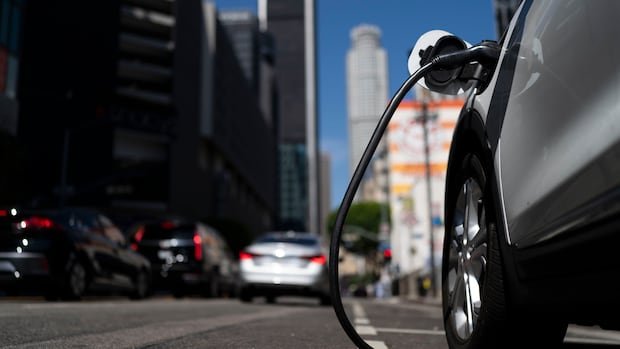

Plug-in hybrids, known as PHEVs, were once seen as a green compromise for environmentally conscious drivers who also enjoy road trips. However, a notable issue has arisen – many PHEV owners are not utilizing the electric aspect of these vehicles as intended, relying more on the gasoline engine instead. Various studies have revealed that PHEVs are being predominantly driven in gas mode, leading to higher emissions than expected.
This usage pattern has drawn criticism for allowing manufacturers to achieve appealing fuel efficiency ratings based on ideal conditions that do not align with real-world usage. As Canada deliberates on its electric vehicle regulations, there is a debate on how plug-in hybrids should be factored into the equation.
Despite PHEVs accounting for only a small percentage of new car registrations in Canada over the past five years, there are still hundreds of thousands of these vehicles on Canadian roads. Recent scrutiny of PHEVs has emerged from environmental groups utilizing actual fuel consumption data from numerous plug-in hybrids in Europe, revealing significant discrepancies from official assumptions.
Industry experts suggest that early PHEVs were primarily developed to meet regulatory requirements for reducing carbon emissions in transportation. These vehicles, often termed as compliance cars, helped manufacturers comply with stringent environmental standards while enabling cost-saving benefits through shared manufacturing processes with non-electric models.
In Canada, PHEVs played a role in meeting the government’s target of transitioning to all-electric vehicle sales by 2035. These vehicles contribute towards a manufacturer’s zero-emissions fleet quota, unlike traditional hybrids. However, there is ongoing debate over the treatment of PHEVs in emission credit programs, with some advocating for a balanced approach that recognizes the investments made in full electric platforms.
For consumers, PHEVs offer a middle ground between traditional hybrids and fully electric vehicles, addressing concerns such as range anxiety and limited charging infrastructure. While PHEVs like the Kia Niro have proven beneficial for city driving with their electric range, challenges arise during longer trips where charging stations may be scarce.
Looking ahead, there is optimism for the future of PHEVs in Canada, with recommendations to continue integrating these vehicles into the market to reduce emissions. Despite uncertainties surrounding tariffs and changes in government support for electric vehicles, PHEVs are anticipated to remain a significant segment in the zero-emission vehicle landscape.