
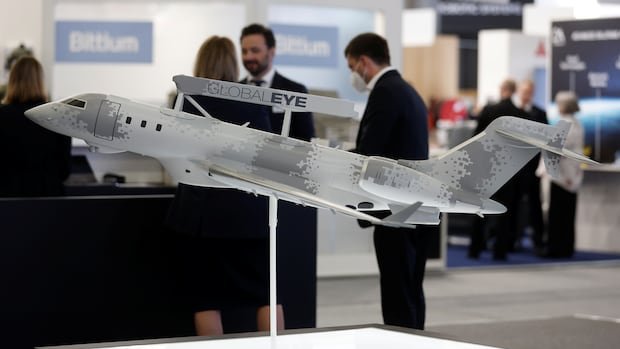

Ottawa entered negotiations for six Saab GlobalEye surveillance planes without assurances that the aircraft would fully meet military specifications, sources revealed to CBC News. Recent assessments indicated that the GlobalEye only partially meets military requirements, necessitating modifications for operational readiness.
During the CANSEC arms exposition in Ottawa last May, Prime Minister Mark Carney surprised attendees with the announcement of the aircraft acquisition deal, including plans for a production line in Canada. This announcement caught the Royal Canadian Air Force off guard, as they had not yet communicated their specific technical and operational needs for the new surveillance aircraft to potential bidders.
Stephen Fuhr, the government’s defense procurement lead, emphasized the importance of considering factors like cost, job creation, and geopolitics in major military acquisitions, alongside meeting requirements. The Air Force had to hastily evaluate the GlobalEye’s capabilities post-announcement to align them with their Arctic surveillance needs.
Saab proposed modifications to address concerns such as radar coverage limitations and connectivity issues with the NORAD network. The military sought additional features like in-flight refueling for Arctic operations, not present in the current GlobalEye design.
Saab executives expressed readiness to meet Canadian military expectations, highlighting the adaptability of their engineering process to customer demands. Despite concerns raised by experts regarding the alignment of defense needs with industrial policy, Ottawa’s focus on job creation and economic stimulus through military procurement remains a priority.
The process of aligning military requirements with available products for procurement aims to ensure informed decision-making and prevent hasty acquisitions that may compromise operational capabilities. The ongoing debate revolves around balancing defense needs, economic interests, and operational risks in major military acquisitions.