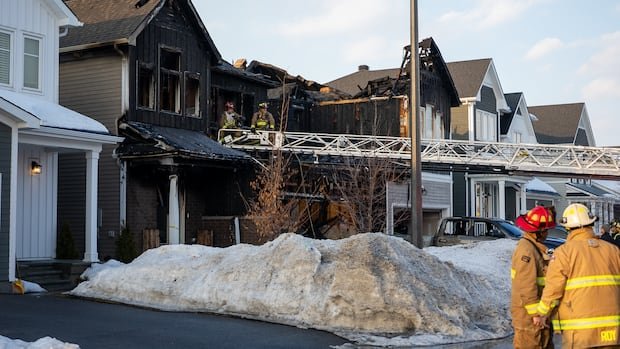

Ottawa Fire Services (OFS) is advising residents against overcharging lithium-ion batteries following a recent fire incident that destroyed two homes in Richmond.
On February 17, emergency crews were dispatched to Pelham Crescent after receiving multiple reports of a house engulfed in flames just before 2 p.m. According to OFS spokesperson Nick DeFazio, the homeowner heard a popping noise emanating from their garage before discovering smoke and flames upon opening the main door.
Firefighters managed to extinguish the blaze by approximately 3:20 p.m., but not before it spread to a neighboring residence, forcing those occupants to vacate. OFS determined that the fire originated from a lithium-ion drill battery that was charging on top of a refrigerator in the garage. This incident marked the second fire in Ottawa this year caused by such batteries, with the first occurring in January due to a dog chewing through a ski glove heated by a similar battery.
The series of battery-related fires prompted OFS to issue a safety advisory owing to the escalating concern surrounding these incidents.
OFS fire prevention officer Leanne Labbee disclosed that there have been around 60 fires involving lithium-ion batteries in Ottawa since 2022. Labbee emphasized the prevalence of lithium-ion batteries in households today, powering a wide array of devices. To illustrate this, Labbee showcased various items in her home reliant on lithium-ion batteries, underscoring their ubiquitous presence and importance.
Despite their omnipresence, lithium-ion batteries necessitate careful handling due to their explosive nature. OFS advises promptly unplugging fully charged batteries to prevent overcharging, which can lead to explosions. Signs of a potentially hazardous situation include hissing sounds, expansion, or unusual odors emanating from the battery.
Ontario’s fire marshal highlighted on social media the risks associated with charging batteries below freezing temperatures, cautioning against such practices in places like garages. Labbee pointed out that lithium-ion battery fires produce significantly more carbon monoxide than those fueled by traditional accelerants like gasoline, making them harder to extinguish with water.
Contrary to conventional alkaline batteries, lithium-ion batteries possess higher voltage levels, enhancing their efficiency but also rendering them more susceptible to explosions. Yaser Abu-Lebdeh, heading the battery materials innovation team at the National Research Council Canada, emphasized the dangers of tampering with or overcharging lithium-ion batteries, which can lead to the release of toxic gases and eventual combustion.
Abu-Lebdeh explained the phenomenon of “thermal runway,” a self-propagating chain reaction within the battery that rapidly escalates temperatures. While safer versions of lithium-ion batteries are not yet available commercially, Abu-Lebdeh mentioned ongoing developments in alternatives incorporating less flammable components, signaling potential breakthroughs in the near future.